

En savoir plus sur le livre
This guide provides, under one cover, a wealth of practical information designed to facilitate the effectiveness of the GC/MS user. Separation conditions for numerous compound types are provided along with derivatized and underivatized compounds. A section on how to interpret mass spectral data, an extensive correlation of ion masses and neutral losses with possible structures, and examples of mass spectra are provided to further aid structure determination. Also included are basic information on instrumentation, ionization methods, quantitation, tips on the operation of mass spectrometers, the best derivatization procedures for a variety of compound types, troubleshooting techniques, and a variety of other information found to be useful to the practicing user of GC/MS instrumentation. This guide would be immediately valuable to the novice as well as the experienced GC/MS user who may not have the breadth of experience covered in this book.Key Features* Condenses and organizes recent and essential information for new and experienced GC/MS users* Comprehensively indexed and referenced* Includes practical methods of analysis* Serves as a text reference for short practical courses on the subject
Achat du livre
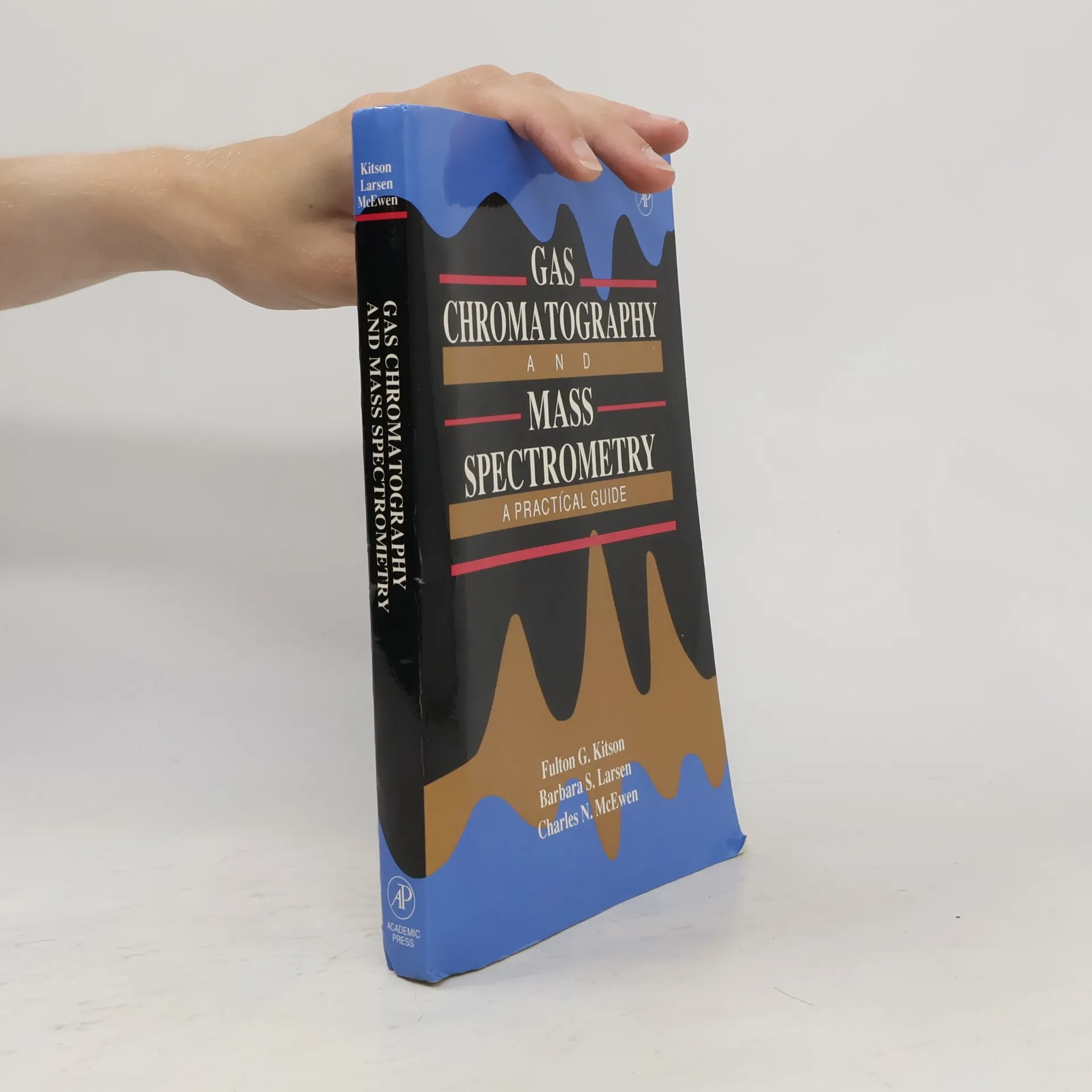
Gas Chromatography and Mass Spectrometry, Fulton G. Kitson, Barbara S. Larsen, Charles N. McEwen
- Langue

- Année de publication
- 1996
- Reliure
- (souple)
Modes de paiement
Personne n'a encore évalué .
- Titre
- Gas Chromatography and Mass Spectrometry
- Sous-titre
- A Practical Guide
- Langue
- Anglais
- Éditeur
- Academic Pr
- Publié
- 1996
- Format
- souple
- Pages
- 381
- ISBN10
- 0124833853
- ISBN13
- 9780124833852
- Séries
- Catégories
- Mots clés
- Sciences naturelles, Science
- Description
- This guide provides, under one cover, a wealth of practical information designed to facilitate the effectiveness of the GC/MS user. Separation conditions for numerous compound types are provided along with derivatized and underivatized compounds. A section on how to interpret mass spectral data, an extensive correlation of ion masses and neutral losses with possible structures, and examples of mass spectra are provided to further aid structure determination. Also included are basic information on instrumentation, ionization methods, quantitation, tips on the operation of mass spectrometers, the best derivatization procedures for a variety of compound types, troubleshooting techniques, and a variety of other information found to be useful to the practicing user of GC/MS instrumentation. This guide would be immediately valuable to the novice as well as the experienced GC/MS user who may not have the breadth of experience covered in this book.Key Features* Condenses and organizes recent and essential information for new and experienced GC/MS users* Comprehensively indexed and referenced* Includes practical methods of analysis* Serves as a text reference for short practical courses on the subject