



Paramètres
- 315pages
- 12 heures de lecture
En savoir plus sur le livre
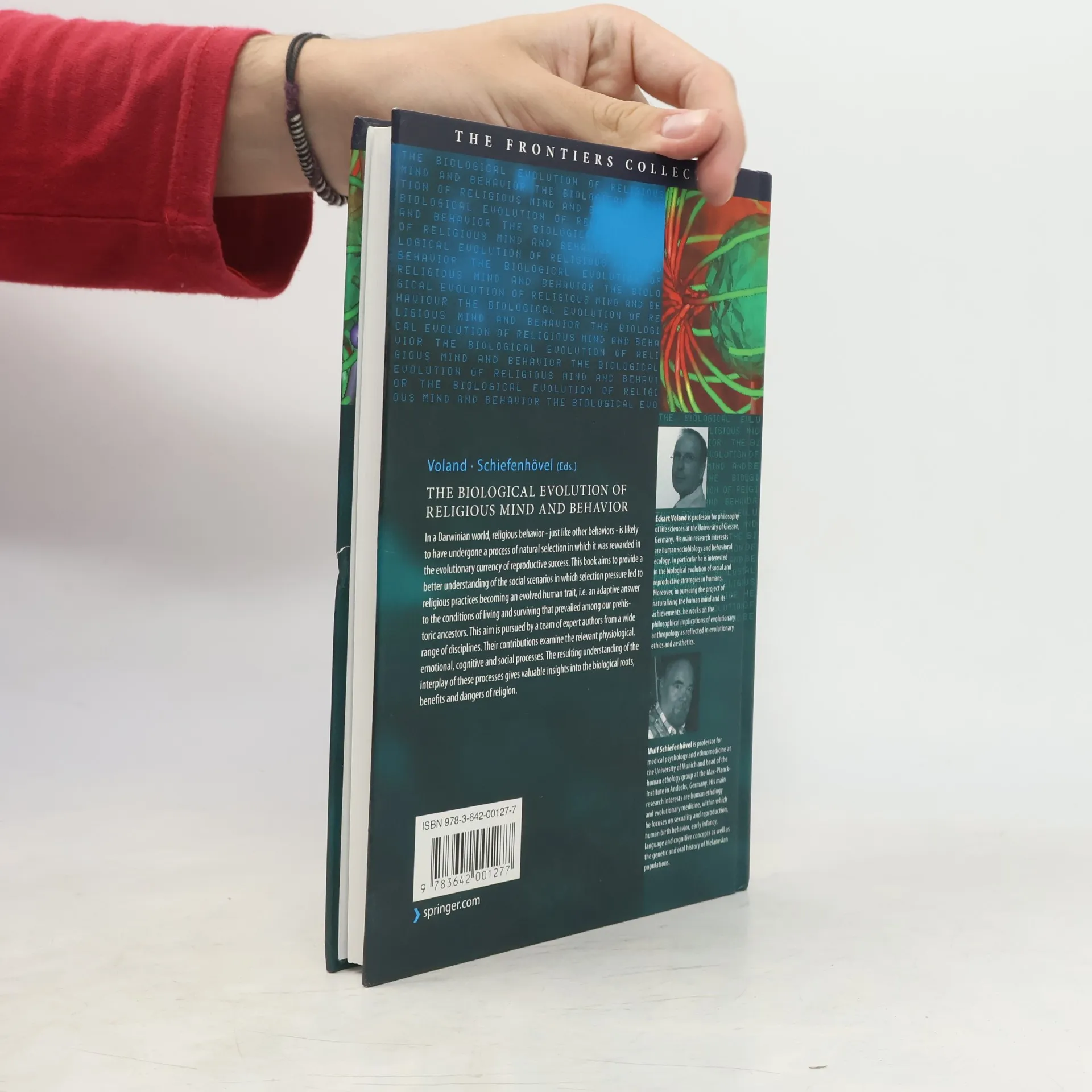
In a Darwinian world, religious behavior - just like other behaviors - is likely to have undergone a process of natural selection in which it was rewarded in the evolutionary currency of reproductive success. This book aims to provide a better understanding of the social scenarios in which selection pressure led to religious practices becoming an evolved human trait, i. e. an adaptive answer to the conditions of living and surviving that prevailed among our prehistoric ancestors. This aim is pursued by a team of expert authors from a range of disciplines. Their contributions examine the relevant physiological, emotional, cognitive and social processes. The resulting understanding of the functional interplay of these processes gives valuable insights into the biological roots and benefits of religion.
Achat du livre
The Frontiers Collection: The Biological Evolution of Religious Mind and Behaviour, Eckart Voland, Wulf Schiefenhövel
- Langue

- Année de publication
- 2009
- Reliure
- (rigide)
Modes de paiement
Personne n'a encore évalué .
- Titre
- The Frontiers Collection: The Biological Evolution of Religious Mind and Behaviour
- Langue
- Anglais
- Auteurs
- Eckart Voland, Wulf Schiefenhövel
- Éditeur
- Springer
- Publié
- 2009
- Format
- rigide
- Pages
- 315
- ISBN10
- 3642001270
- ISBN13
- 9783642001277
- Séries
- Catégories
- Mots clés
- Thème historique, Sciences naturelles, Thèmes religieux, Thématique philosophique, Science, Allemagne, Théologie, Évolution, Biologie évolutive, Charles Darwin, Psychologie évolutive
- Description
- In a Darwinian world, religious behavior - just like other behaviors - is likely to have undergone a process of natural selection in which it was rewarded in the evolutionary currency of reproductive success. This book aims to provide a better understanding of the social scenarios in which selection pressure led to religious practices becoming an evolved human trait, i. e. an adaptive answer to the conditions of living and surviving that prevailed among our prehistoric ancestors. This aim is pursued by a team of expert authors from a range of disciplines. Their contributions examine the relevant physiological, emotional, cognitive and social processes. The resulting understanding of the functional interplay of these processes gives valuable insights into the biological roots and benefits of religion.