



Paramètres
- 192pages
- 7 heures de lecture
En savoir plus sur le livre
In this daring work, Edward O. Wilson proposes an alliance between science and religion to save Earth's vanishing biodiversity. He addresses a pastor, sharing a sense of shared faith and mutual respect, and urges a meeting on common ground to confront the urgent crisis facing the planet. Wilson emphasizes that the defense of living Nature transcends religious and ideological divides, serving the interests of all humanity. He warns that the Creation is in deep trouble, echoing the concerns of Rachel Carson's "Silent Spring," but with a broader focus on the survival of our planet. Drawing on his expertise as an entomologist, Wilson predicts that half of Earth's species could face extinction by the century's end. Unlike typical critiques of fundamentalism, Wilson seeks to engage with Christians on their terms, framing his message as a heartfelt letter to a Southern Baptist minister. He implores religious leaders to recognize the catastrophic damage to the planet and to join in efforts to prevent further destruction. Optimistically, Wilson believes that solutions exist and that a shared vision can unite scientists and pastors, fostering collaboration despite their ideological differences.
Achat du livre
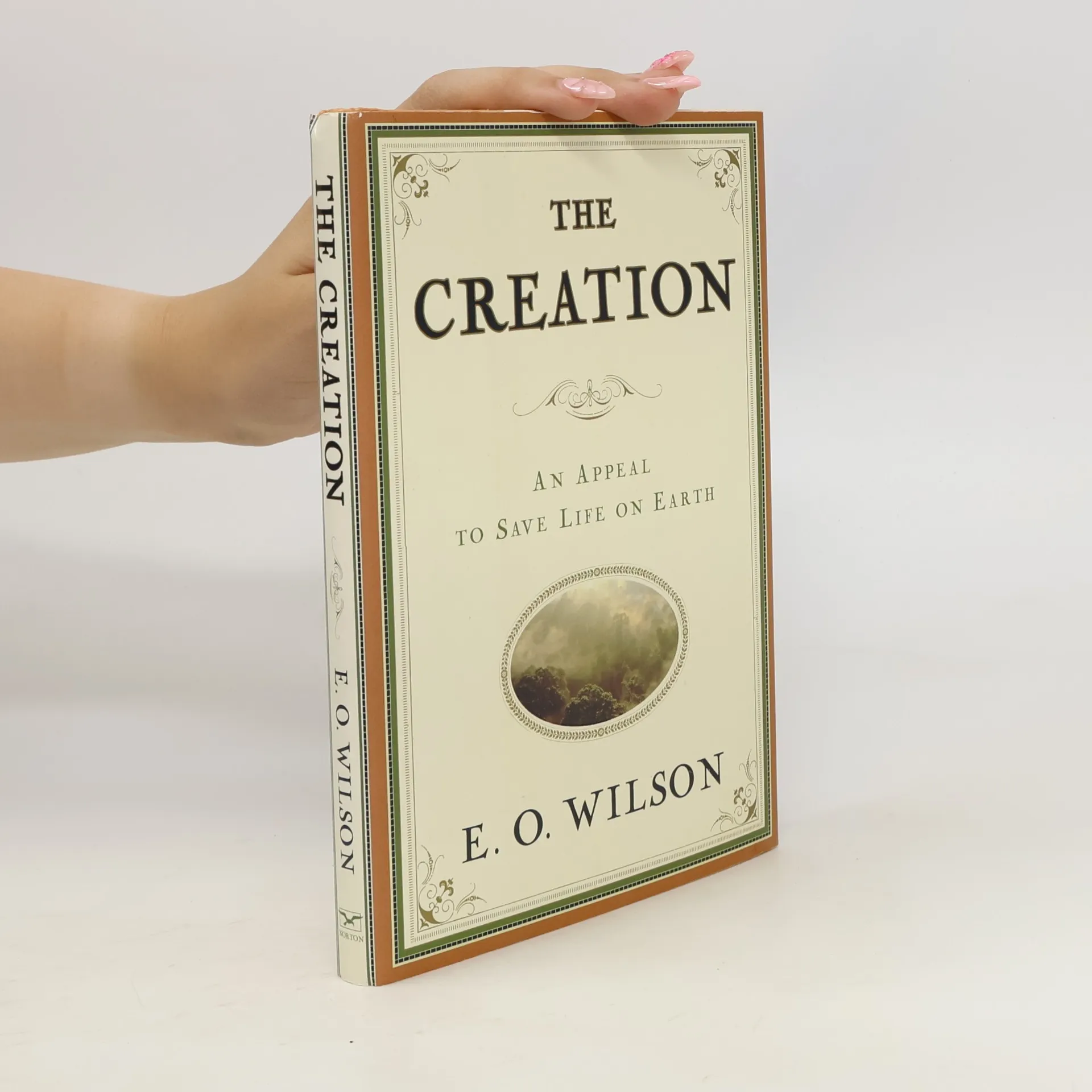
The Creation, Edward O. Wilson
- Langue

- Année de publication
- 2006
- Reliure
- (rigide)
Modes de paiement
Personne n'a encore évalué .
- Titre
- The Creation
- Sous-titre
- An Appeal to Save Life on Earth
- Langue
- Anglais
- Auteurs
- Edward O. Wilson
- Éditeur
- W. W. Norton & Company
- Publié
- 2006
- Format
- rigide
- Pages
- 192
- ISBN10
- 0393062171
- ISBN13
- 9780393062175
- Séries
- Catégories
- Mots clés
- La nature, Sciences naturelles, Thèmes religieux, Thèmes chrétiens, Science, États-Unis, Thématique écologique, Sciences environnementales, Création
- Description
- In this daring work, Edward O. Wilson proposes an alliance between science and religion to save Earth's vanishing biodiversity. He addresses a pastor, sharing a sense of shared faith and mutual respect, and urges a meeting on common ground to confront the urgent crisis facing the planet. Wilson emphasizes that the defense of living Nature transcends religious and ideological divides, serving the interests of all humanity. He warns that the Creation is in deep trouble, echoing the concerns of Rachel Carson's "Silent Spring," but with a broader focus on the survival of our planet. Drawing on his expertise as an entomologist, Wilson predicts that half of Earth's species could face extinction by the century's end. Unlike typical critiques of fundamentalism, Wilson seeks to engage with Christians on their terms, framing his message as a heartfelt letter to a Southern Baptist minister. He implores religious leaders to recognize the catastrophic damage to the planet and to join in efforts to prevent further destruction. Optimistically, Wilson believes that solutions exist and that a shared vision can unite scientists and pastors, fostering collaboration despite their ideological differences.