

Paramètres
- 242pages
- 9 heures de lecture
En savoir plus sur le livre
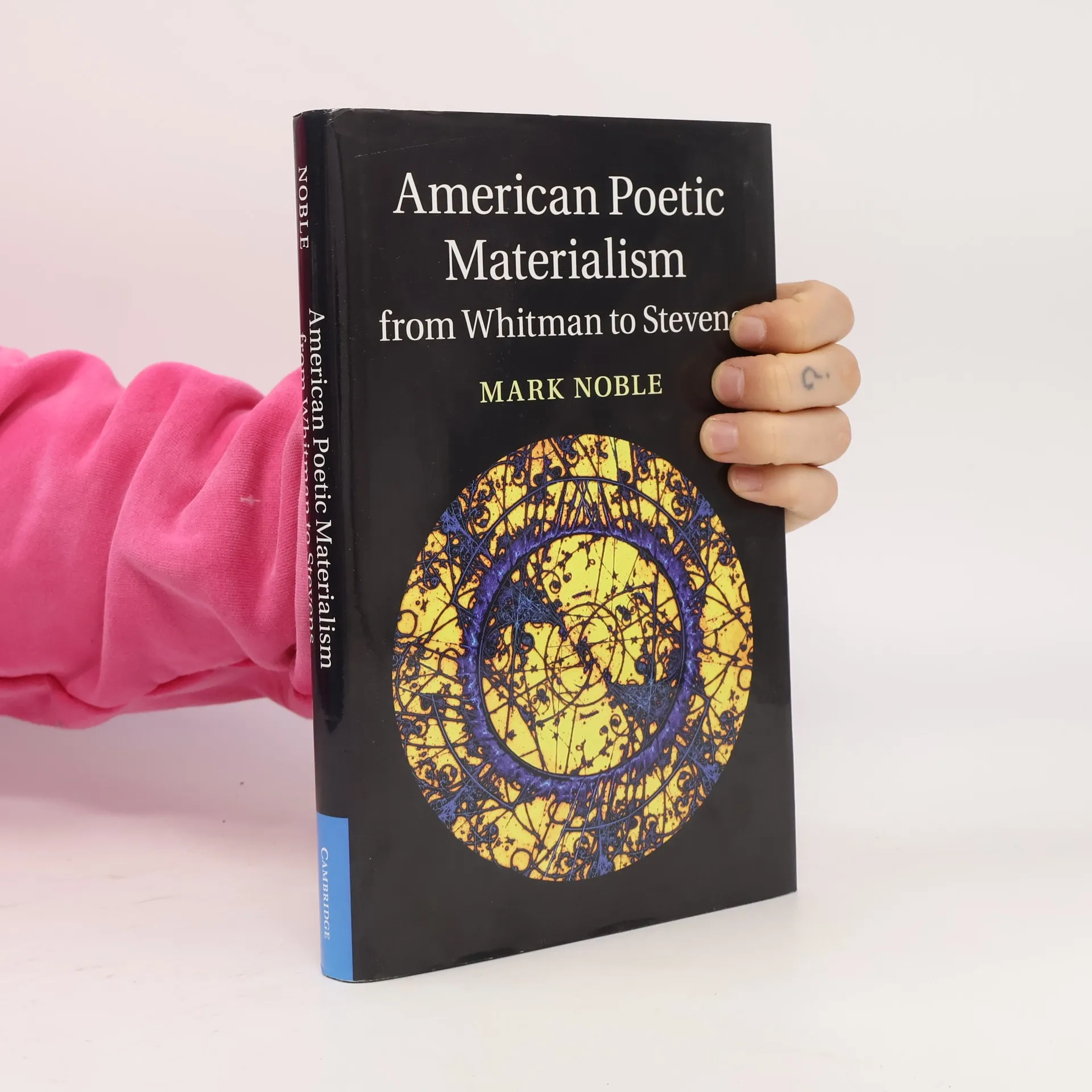
In American Poetic Materialism from Whitman to Stevens, Mark Noble examines writers who rethink the human in material terms. Do our experiences correlate to our material elements? Do visions of a common physical ground imply a common purpose? Noble proposes new readings of Walt Whitman, Ralph Waldo Emerson, William James, George Santayana and Wallace Stevens that explore a literary history wrestling with the consequences of its own materialism. At a moment when several new models of the relationship between human experience and its physical ground circulate among critical theorists and philosophers of science, this book turns to poets who have long asked what our shared materiality can tell us about our prospects for new models of our material selves.
Achat du livre
Cambridge Studies in American Literature and Culture: American Poetic Materialism from Whitman to Stevens, Mark Noble
- Langue

- Année de publication
- 2015
- Reliure
- (rigide)
Modes de paiement
Personne n'a encore évalué .
- Titre
- Cambridge Studies in American Literature and Culture: American Poetic Materialism from Whitman to Stevens
- Langue
- Anglais
- Auteurs
- Mark Noble
- Éditeur
- Cambridge University Press
- Publié
- 2015
- Format
- rigide
- Pages
- 242
- ISBN10
- 1107084504
- ISBN13
- 9781107084506
- Séries
- Description
- In American Poetic Materialism from Whitman to Stevens, Mark Noble examines writers who rethink the human in material terms. Do our experiences correlate to our material elements? Do visions of a common physical ground imply a common purpose? Noble proposes new readings of Walt Whitman, Ralph Waldo Emerson, William James, George Santayana and Wallace Stevens that explore a literary history wrestling with the consequences of its own materialism. At a moment when several new models of the relationship between human experience and its physical ground circulate among critical theorists and philosophers of science, this book turns to poets who have long asked what our shared materiality can tell us about our prospects for new models of our material selves.