


En savoir plus sur le livre
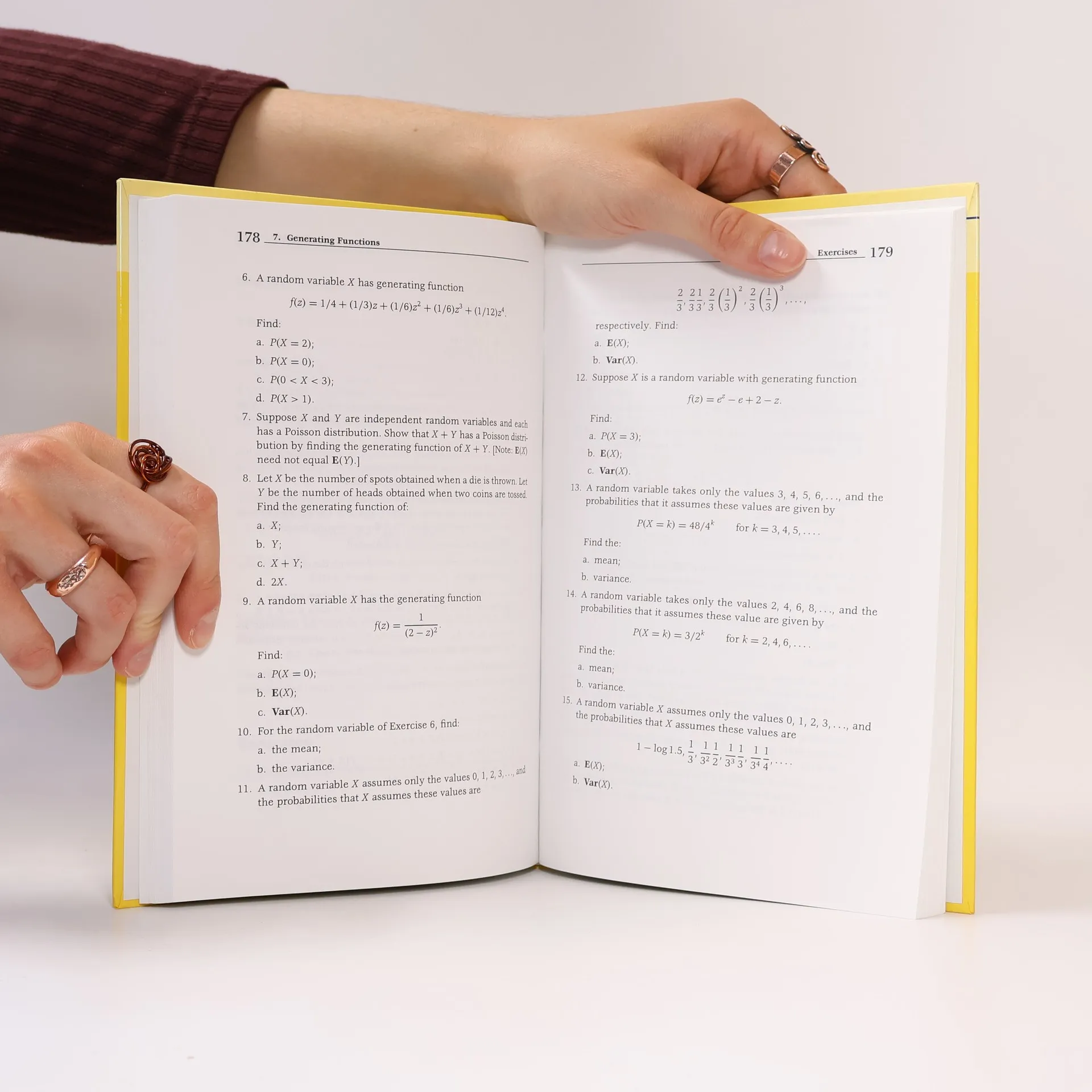
Intended as a first course in probability at post-calculus level, this book is of special interest to students majoring in computer science as well as in mathematics. Since calculus is used only occasionally in the text, students who have forgotten their calculus can nevertheless easily understand the book, and its slow, gentle style and clear exposition will also appeal. Basic concepts such as counting, independence, conditional probability, random variables, approximation of probabilities, generating functions, random walks and Markov chains are all clearly explained and backed by many worked exercises. The 1,196 numerical answers to the 405 exercises, many with multiple parts, are included at the end of the book, and throughout, there are various historical comments on the study of probability. These include biographical information on such famous contributors as Fermat, Pascal, the Bernoullis, DeMoivre, Bayes, Laplace, Poisson, and Markov. Of interest to a wide range of readers and useful in many undergraduate programs.
Achat du livre
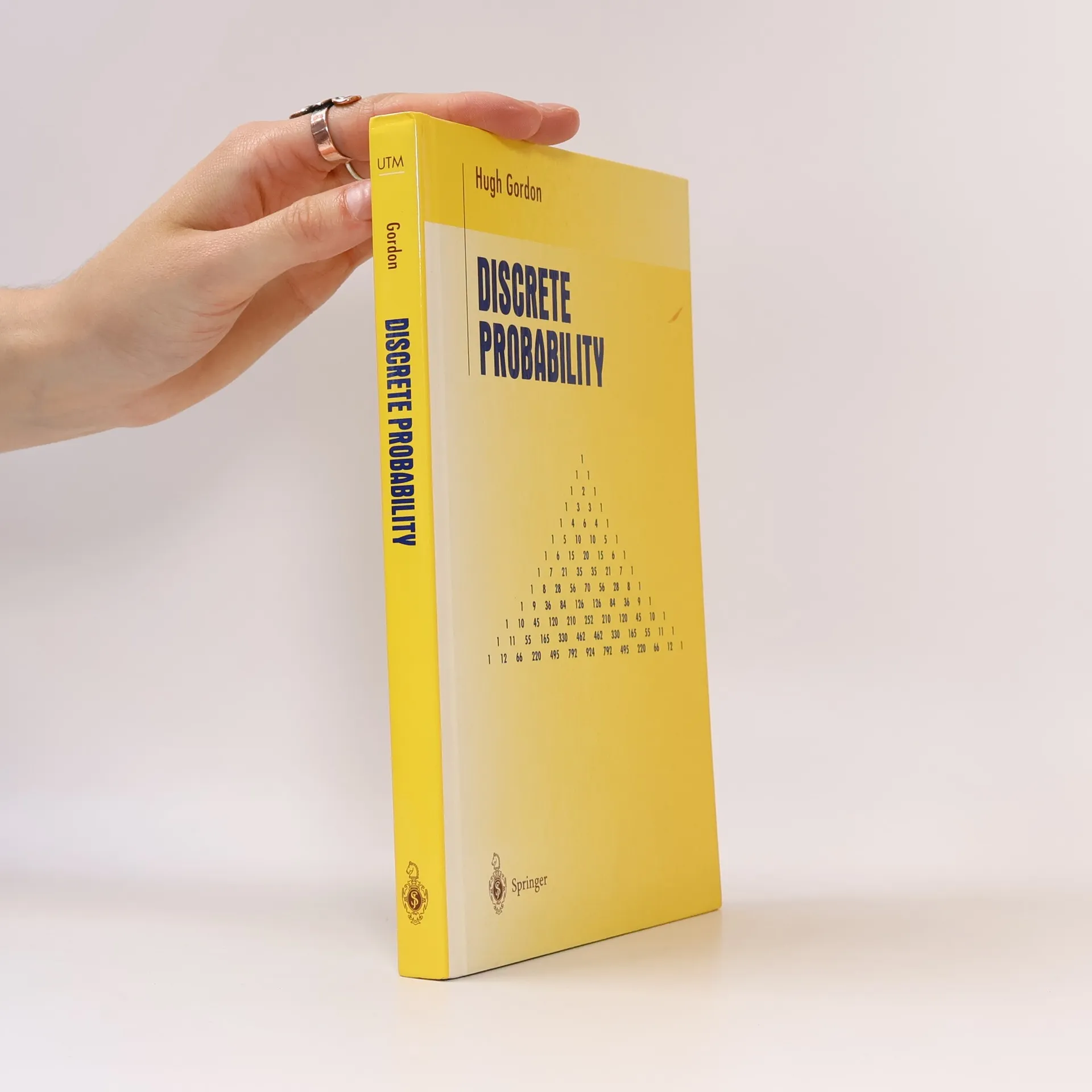
Undergraduate Texts in Mathematics: Discrete Probability, Gordon Hughes
- Langue

- Année de publication
- 1997
- Reliure
- (rigide)
Modes de paiement
Personne n'a encore évalué .
- Titre
- Undergraduate Texts in Mathematics: Discrete Probability
- Langue
- Anglais
- Auteurs
- Gordon Hughes
- Éditeur
- Springer
- Publié
- 1997
- Format
- rigide
- Pages
- 279
- ISBN10
- 0387982272
- ISBN13
- 9780387982274
- Séries
- Mots clés
- Description
- Intended as a first course in probability at post-calculus level, this book is of special interest to students majoring in computer science as well as in mathematics. Since calculus is used only occasionally in the text, students who have forgotten their calculus can nevertheless easily understand the book, and its slow, gentle style and clear exposition will also appeal. Basic concepts such as counting, independence, conditional probability, random variables, approximation of probabilities, generating functions, random walks and Markov chains are all clearly explained and backed by many worked exercises. The 1,196 numerical answers to the 405 exercises, many with multiple parts, are included at the end of the book, and throughout, there are various historical comments on the study of probability. These include biographical information on such famous contributors as Fermat, Pascal, the Bernoullis, DeMoivre, Bayes, Laplace, Poisson, and Markov. Of interest to a wide range of readers and useful in many undergraduate programs.