

Paramètres
- 336pages
- 12 heures de lecture
En savoir plus sur le livre
This book intends to show that we should re-think and re-evaluate our dogmatic commitment to a cognitivistic attitude. Our high regard for knowledge is due to the fact that we expect that it will help us satisfy not only our practical needs but also guide us toward a meaningful and fulfilled life. A careful examination of the nature and limits of knowledge reveals that both expectations cannot be satisfied. Following Kant, Cicovacki comes to the conclusion that, although our knowledge of reality seems to be reliable and true, at the same time it seems to be one-sided and very narrowly oriented. Our practical purposes seem to be served quite well, but it is dubious whether our knowledge helps us understand and find our own place and role in reality. Those pursuing science and analytic philosophy do not seem to realize that our knowledge of reality is at the same time reliable and true, and yet distorting and damaging. Cicovacki focuses on Kant's question: ^D
Achat du livre
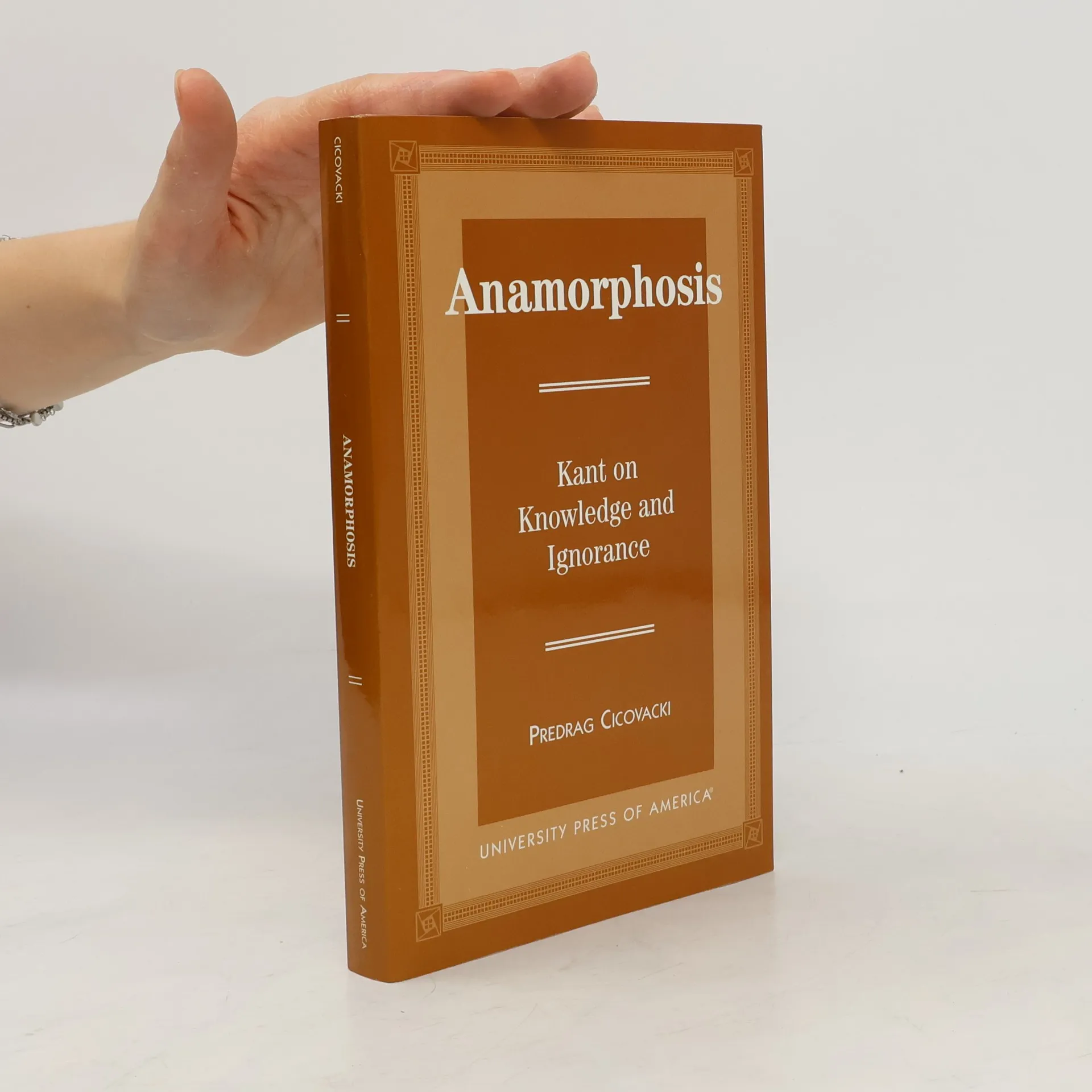
Anamorphosis, Predrag Cicovacki
- Langue

- Année de publication
- 1997
- Reliure
- (souple)
Modes de paiement
Personne n'a encore évalué .
- Titre
- Anamorphosis
- Sous-titre
- Kant and Knowledge and Ignorance
- Langue
- Anglais
- Auteurs
- Predrag Cicovacki
- Éditeur
- University Press of America
- Publié
- 1997
- Format
- souple
- Pages
- 336
- ISBN10
- 076180790X
- ISBN13
- 9780761807902
- Séries
- Catégories
- Mots clés
- Thématique philosophique, Méthodologie, Théorie de la connaissance, Immanuel Kant, 1724-1804
- Description
- This book intends to show that we should re-think and re-evaluate our dogmatic commitment to a cognitivistic attitude. Our high regard for knowledge is due to the fact that we expect that it will help us satisfy not only our practical needs but also guide us toward a meaningful and fulfilled life. A careful examination of the nature and limits of knowledge reveals that both expectations cannot be satisfied. Following Kant, Cicovacki comes to the conclusion that, although our knowledge of reality seems to be reliable and true, at the same time it seems to be one-sided and very narrowly oriented. Our practical purposes seem to be served quite well, but it is dubious whether our knowledge helps us understand and find our own place and role in reality. Those pursuing science and analytic philosophy do not seem to realize that our knowledge of reality is at the same time reliable and true, and yet distorting and damaging. Cicovacki focuses on Kant's question: ^D