

Paramètres
- 486pages
- 18 heures de lecture
En savoir plus sur le livre
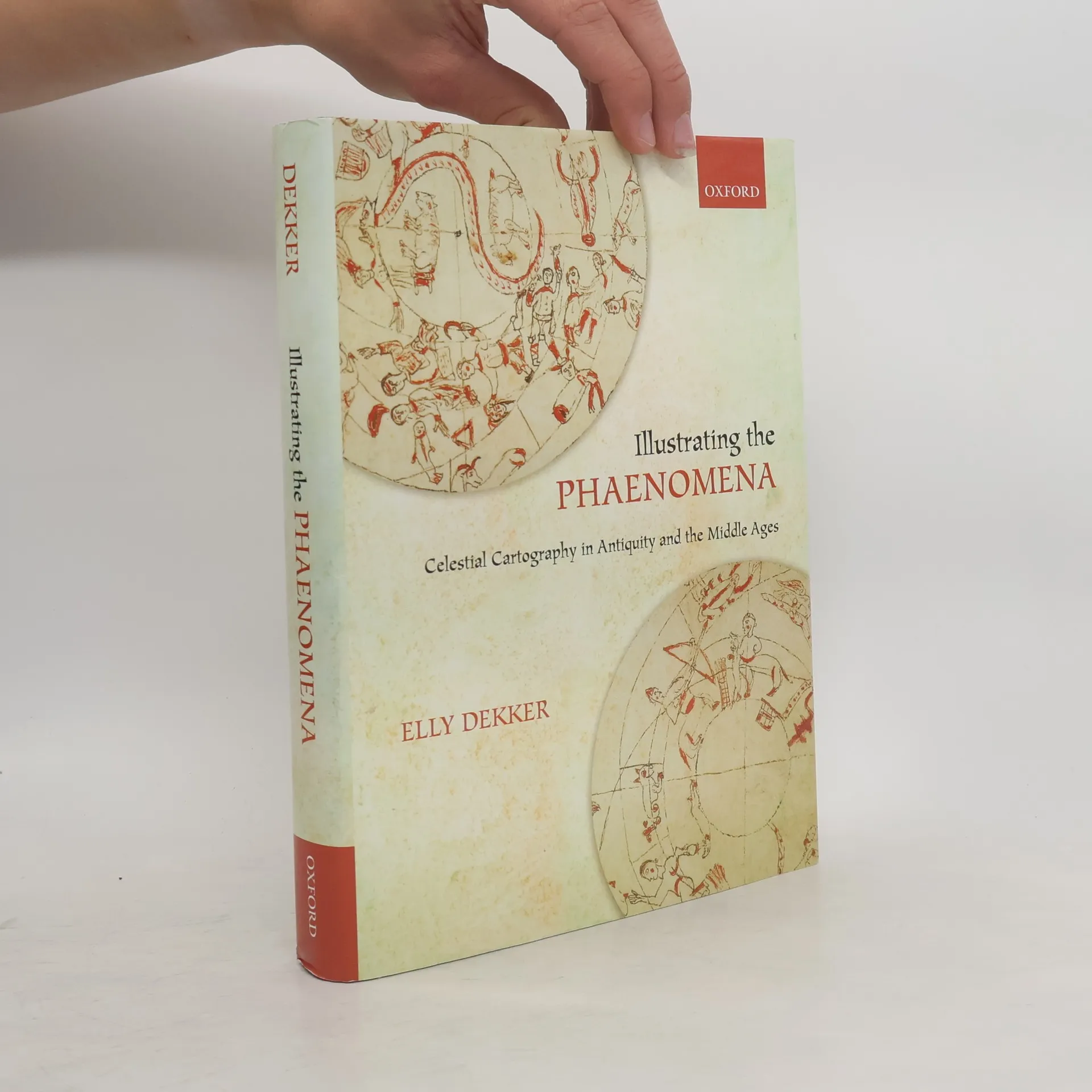
The introduction of the moving sphere as a model for understanding the celestial phenomena caused a great breakthrough in scientific thinking about the structure of the world. It provided the momentum for making celestial globes and mapping the stars. Celestial globes were produced first by Greek astronomers, and soon became greatly appreciated in antiquity as decorative objects (3 antique globes). The design and construction of the globe varied greatly as it passed through the Arabic (10 scientific globes made before 1500) and Medieval European cultures (3 scientific globes made before 1500). It was the starting-point for the design of many maps in antiquity and later in the Middle Ages (33) serving to illustrate books such as Aratus's Phaenomena. In the early fifteenth century scientific celestial maps (5) were constructed in their own right, independent of globes. In this book all extant celestial maps and globes made before 1500 are described and analysed in detail. This prestigious study will appeal to academic historians of science and astronomy, and art historians alike.
Achat du livre
Illustrating the Phaenomena, Elly Dekker
- Langue

- Année de publication
- 2012
- Reliure
- (rigide)
Modes de paiement
Personne n'a encore évalué .
- Titre
- Illustrating the Phaenomena
- Sous-titre
- Celestial Cartography in Antiquity and the Middle Ages
- Langue
- Anglais
- Auteurs
- Elly Dekker
- Éditeur
- Oxford University Press
- Publié
- 2012
- Format
- rigide
- Pages
- 486
- ISBN10
- 0199609691
- ISBN13
- 9780199609697
- Séries
- Catégories
- Mots clés
- Thème historique, Manuels et guides, Art, Science, Espace, Histoire de l'art, Histoire des sciences, Histoire des sciences naturelles
- Description
- The introduction of the moving sphere as a model for understanding the celestial phenomena caused a great breakthrough in scientific thinking about the structure of the world. It provided the momentum for making celestial globes and mapping the stars. Celestial globes were produced first by Greek astronomers, and soon became greatly appreciated in antiquity as decorative objects (3 antique globes). The design and construction of the globe varied greatly as it passed through the Arabic (10 scientific globes made before 1500) and Medieval European cultures (3 scientific globes made before 1500). It was the starting-point for the design of many maps in antiquity and later in the Middle Ages (33) serving to illustrate books such as Aratus's Phaenomena. In the early fifteenth century scientific celestial maps (5) were constructed in their own right, independent of globes. In this book all extant celestial maps and globes made before 1500 are described and analysed in detail. This prestigious study will appeal to academic historians of science and astronomy, and art historians alike.