

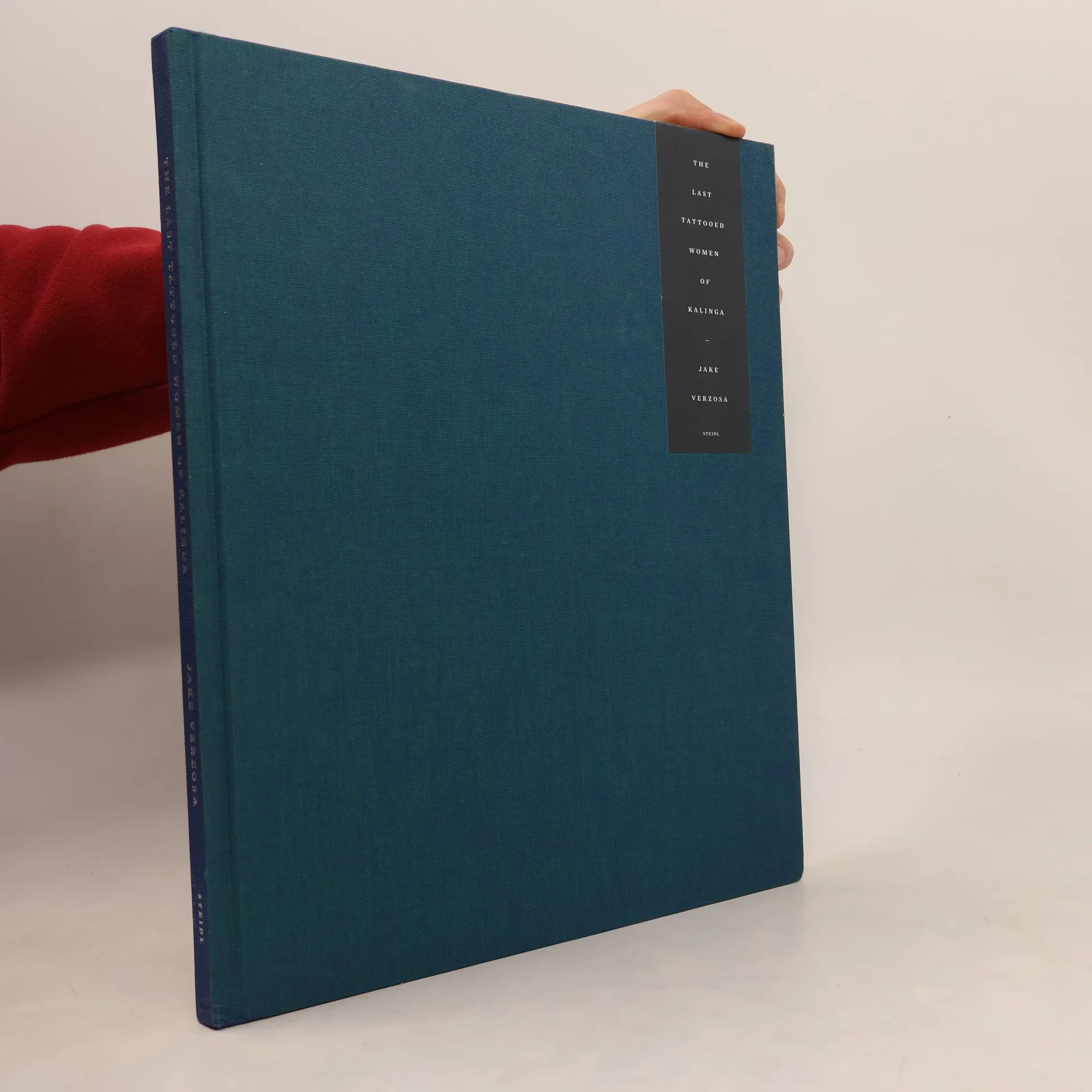
The Last Tattooed Women of Kalinga
Évaluation du livre
En savoir plus sur le livre
The Last Tattooed Women of Kalinga presents a series of portraits by Jake Verzosa who laments and celebrates a dying tradition of tattooing in villages throughout the Cordillera mountains in the northern Philippines. For nearly a thousand years the Kalinga women have proudly worn these lace-like patterns or batok on their skin as symbols of beauty, wealth, stature and fortitude. Applied as part of a painful ritual, the vivid tattoos—abstractions of motifs such as ferns, rice bundles, centipedes and flowing rivers—reflect a rite of passage and a powerful bond with nature. Yet today this intricate form of self-adornment has largely been abandoned due to changing aesthetic perceptions. Between 2009 and 2013, Verzosa traveled extensively to document the last generation of women with the batok. The resulting pictures reveal the artistic designs of the tattoos, as well as their symbolic functions as signs of social belonging and testimonies to personal struggle and triumph in which the skin becomes a “story.” Accompanying Verzosa’s portraits is a detailed illustrated glossary of the tattoo types and their meanings.
Achat du livre
The Last Tattooed Women of Kalinga, Jake Verzosa, François Cheval, Natividad Sugguiyao
- Langue

- Année de publication
- 2017
- Reliure
- (rigide)
Modes de paiement
Il manque plus que ton avis ici.
- Titre
- The Last Tattooed Women of Kalinga
- Langue
- Anglais
- Éditeur
- Steidl
- Publié
- 2017
- Format
- rigide
- Pages
- 96
- ISBN10
- 3958293174
- ISBN13
- 9783958293175
- Séries
- Mots clés
- Manuels et guides, Art, Usages et coutumes, Ethnologie, Tatouage, Philippines
- Évaluation
- 4 sur 5
- Description
- The Last Tattooed Women of Kalinga presents a series of portraits by Jake Verzosa who laments and celebrates a dying tradition of tattooing in villages throughout the Cordillera mountains in the northern Philippines. For nearly a thousand years the Kalinga women have proudly worn these lace-like patterns or batok on their skin as symbols of beauty, wealth, stature and fortitude. Applied as part of a painful ritual, the vivid tattoos—abstractions of motifs such as ferns, rice bundles, centipedes and flowing rivers—reflect a rite of passage and a powerful bond with nature. Yet today this intricate form of self-adornment has largely been abandoned due to changing aesthetic perceptions. Between 2009 and 2013, Verzosa traveled extensively to document the last generation of women with the batok. The resulting pictures reveal the artistic designs of the tattoos, as well as their symbolic functions as signs of social belonging and testimonies to personal struggle and triumph in which the skin becomes a “story.” Accompanying Verzosa’s portraits is a detailed illustrated glossary of the tattoo types and their meanings.