

Paramètres
- 352pages
- 13 heures de lecture
En savoir plus sur le livre
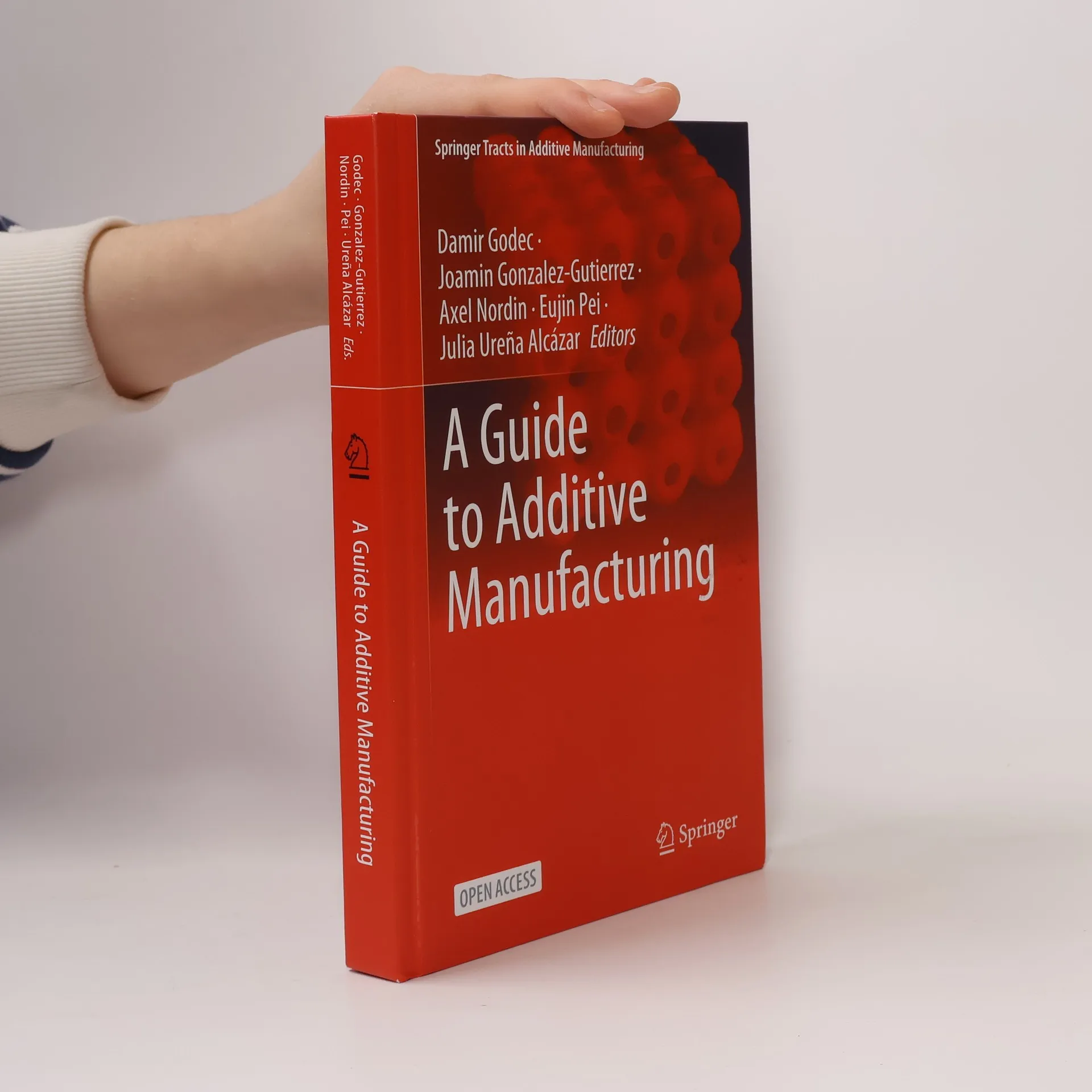
This open access book gives both a theoretical and practical overview of several important aspects of additive manufacturing (AM). It is written in an educative style to enable the reader to understand and apply the material. It begins with an introduction to AM technologies and the general workflow, as well as an overview of the current standards within AM. In the following chapter, a more in-depth description is given of design optimization and simulation for AM in polymers and metals, including practical guidelines for topology optimization and the use of lattice structures. Special attention is also given to the economics of AM and when the technology offers a benefit compared to conventional manufacturing processes. This is followed by a chapter with practical insights into how AM materials and processing parameters are developed for both material extrusion and powder bed fusion. The final chapter describes functionally graded AM in various materials and technologies. Throughout the book, a large number of industrial applications are described to exemplify the benefits of AM.
Achat du livre
Springer Tracts in Additive Manufacturing: A Guide to Additive Manufacturing, Damir Godec, Joamin Gonzalez-Gutierrez, Axel Nordin, Eujin Pei, Julia Ureña Alcázar
- Langue

- Année de publication
- 2022
- Reliure
- (rigide)
Modes de paiement
Personne n'a encore évalué .
- Titre
- Springer Tracts in Additive Manufacturing: A Guide to Additive Manufacturing
- Langue
- Anglais
- Éditeur
- Springer
- Publié
- 2022
- Format
- rigide
- Pages
- 352
- ISBN10
- 3031058623
- ISBN13
- 9783031058622
- Séries
- Mots clés
- Manuels universitaires, Science, Technologie, Ingénierie, Impression 3D
- Description
- This open access book gives both a theoretical and practical overview of several important aspects of additive manufacturing (AM). It is written in an educative style to enable the reader to understand and apply the material. It begins with an introduction to AM technologies and the general workflow, as well as an overview of the current standards within AM. In the following chapter, a more in-depth description is given of design optimization and simulation for AM in polymers and metals, including practical guidelines for topology optimization and the use of lattice structures. Special attention is also given to the economics of AM and when the technology offers a benefit compared to conventional manufacturing processes. This is followed by a chapter with practical insights into how AM materials and processing parameters are developed for both material extrusion and powder bed fusion. The final chapter describes functionally graded AM in various materials and technologies. Throughout the book, a large number of industrial applications are described to exemplify the benefits of AM.