

En savoir plus sur le livre
This book explains concepts of transmission electron microscopy (TEM) and x-ray diffractometry (XRD) that are important for the characterization of materials. The fourth edition adds important new techniques of TEM such as electron tomography, nanobeam diffraction, and geometric phase analysis. A new chapter on neutron scattering completes the trio of x-ray, electron and neutron diffraction. All chapters were updated and revised for clarity. The book explains the fundamentals of how waves and wavefunctions interact with atoms in solids, and the similarities and differences of using x-rays, electrons, or neutrons for diffraction measurements. Diffraction effects of crystalline order, defects, and disorder in materials are explained in detail. Both practical and theoretical issues are covered. The book can be used in an introductory-level or advanced-level course, since sections are identified by difficulty. Each chapter includes a set of problems to illustrate principles, and the extensive Appendix includes laboratory exercises.
Achat du livre
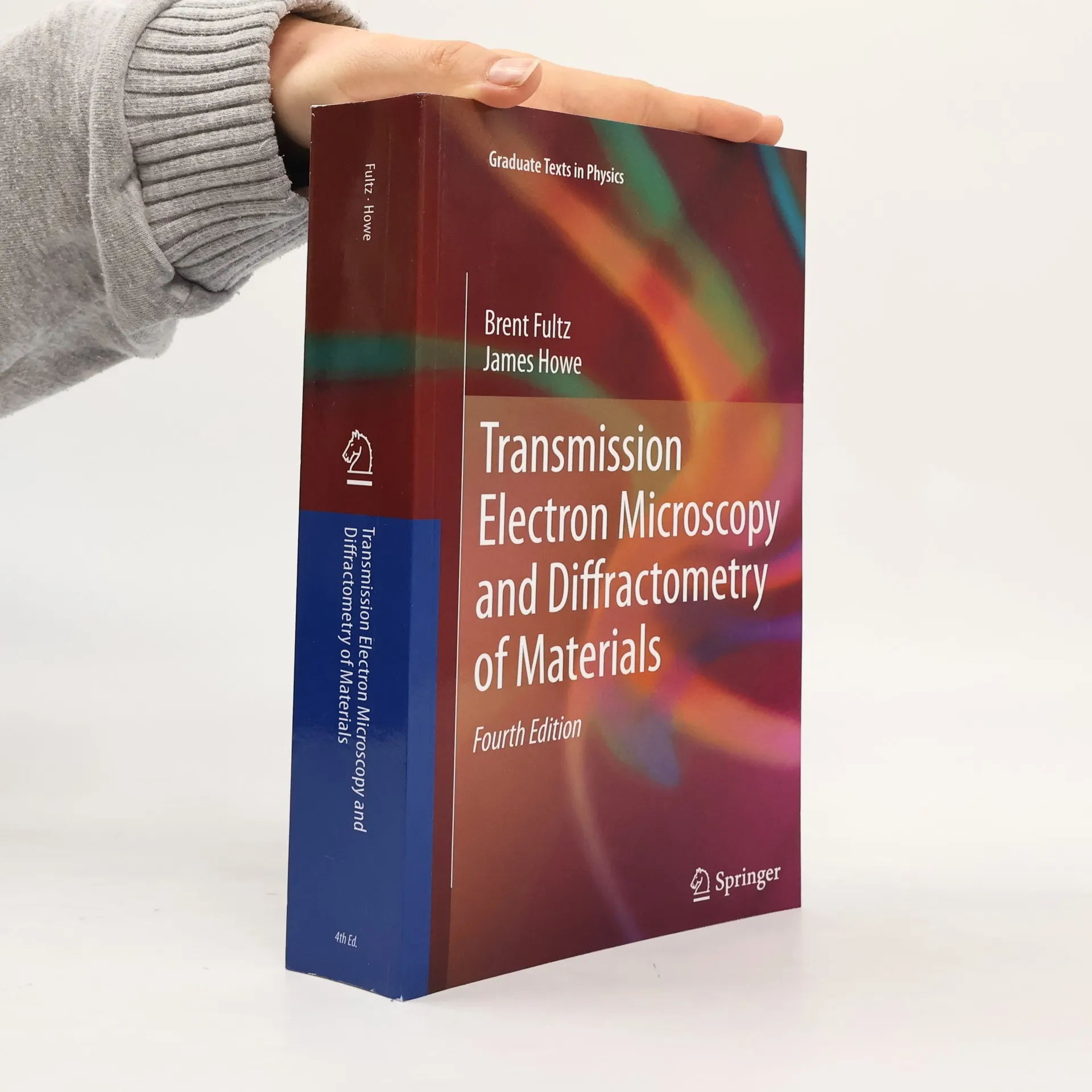
Graduate Texts in Physics: Transmission Electron Microscopy and Diffractometry of Materials - Fourth Edition, Brent Fultz, James M. Howe
- Langue

- Année de publication
- 2014
- Reliure
- (souple)
Modes de paiement
Personne n'a encore évalué .
- Titre
- Graduate Texts in Physics: Transmission Electron Microscopy and Diffractometry of Materials - Fourth Edition
- Langue
- Anglais
- Auteurs
- Brent Fultz, James M. Howe
- Éditeur
- Springer
- Publié
- 2014
- Format
- souple
- Pages
- 784
- ISBN10
- 3642433154
- ISBN13
- 9783642433153
- Séries
- Mots clés
- Sciences naturelles, Science, Technologie, Chimie physique
- Description
- This book explains concepts of transmission electron microscopy (TEM) and x-ray diffractometry (XRD) that are important for the characterization of materials. The fourth edition adds important new techniques of TEM such as electron tomography, nanobeam diffraction, and geometric phase analysis. A new chapter on neutron scattering completes the trio of x-ray, electron and neutron diffraction. All chapters were updated and revised for clarity. The book explains the fundamentals of how waves and wavefunctions interact with atoms in solids, and the similarities and differences of using x-rays, electrons, or neutrons for diffraction measurements. Diffraction effects of crystalline order, defects, and disorder in materials are explained in detail. Both practical and theoretical issues are covered. The book can be used in an introductory-level or advanced-level course, since sections are identified by difficulty. Each chapter includes a set of problems to illustrate principles, and the extensive Appendix includes laboratory exercises.