



Paramètres
- 240pages
- 9 heures de lecture
En savoir plus sur le livre
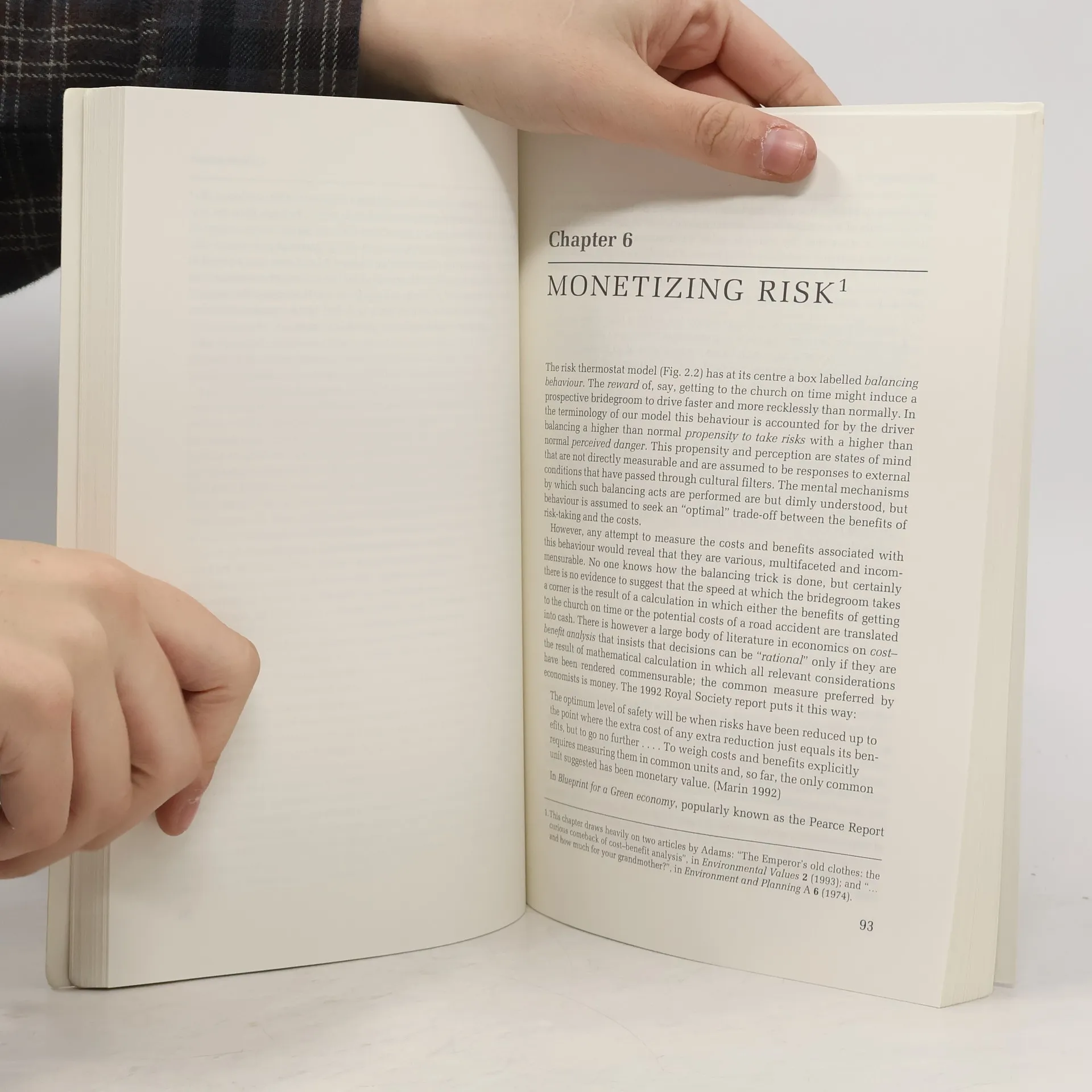
Risk compensation postulates that everyone has a "risk thermostat" and that safety measures that do not affect the setting of the thermostat will be circumvented by behaviour that re-establishes the level of risk with which people were originally comfortable. It explains why, for example, motorists drive faster after a bend in the road is straightened. Cultural theory explains risk-taking behaviour by the operation of cultural filters. It postulates that behaviour is governed by the probable costs and benefits of alternative courses of action which are perceived through filters formed from all the previous incidents and associations in the risk-taker's life.; "Risk" should be of interest to many readers throughout the social sciences and in the world of industry, business, engineering, finance and public administration, since it deals with a fundamental part of human behaviour that has enormous financial and economic implications.
Achat du livre
Risk, John Adams
- Langue

- Année de publication
- 1995
- Reliure
- (souple)
Modes de paiement
Il manque plus que ton avis ici.
- Titre
- Risk
- Langue
- Anglais
- Auteurs
- John Adams
- Éditeur
- Routledge
- Publié
- 1995
- Format
- souple
- Pages
- 240
- ISBN10
- 1857280687
- ISBN13
- 9781857280685
- Séries
- Catégories
- Mots clés
- Commerce, Science, Thématique écologique, Accidents, Sécurité, Aspects sociaux, Routes et communications terrestres, Aspects sociologiques
- Évaluation
- 3,75 sur 5
- Description
- Risk compensation postulates that everyone has a "risk thermostat" and that safety measures that do not affect the setting of the thermostat will be circumvented by behaviour that re-establishes the level of risk with which people were originally comfortable. It explains why, for example, motorists drive faster after a bend in the road is straightened. Cultural theory explains risk-taking behaviour by the operation of cultural filters. It postulates that behaviour is governed by the probable costs and benefits of alternative courses of action which are perceived through filters formed from all the previous incidents and associations in the risk-taker's life.; "Risk" should be of interest to many readers throughout the social sciences and in the world of industry, business, engineering, finance and public administration, since it deals with a fundamental part of human behaviour that has enormous financial and economic implications.