

En savoir plus sur le livre
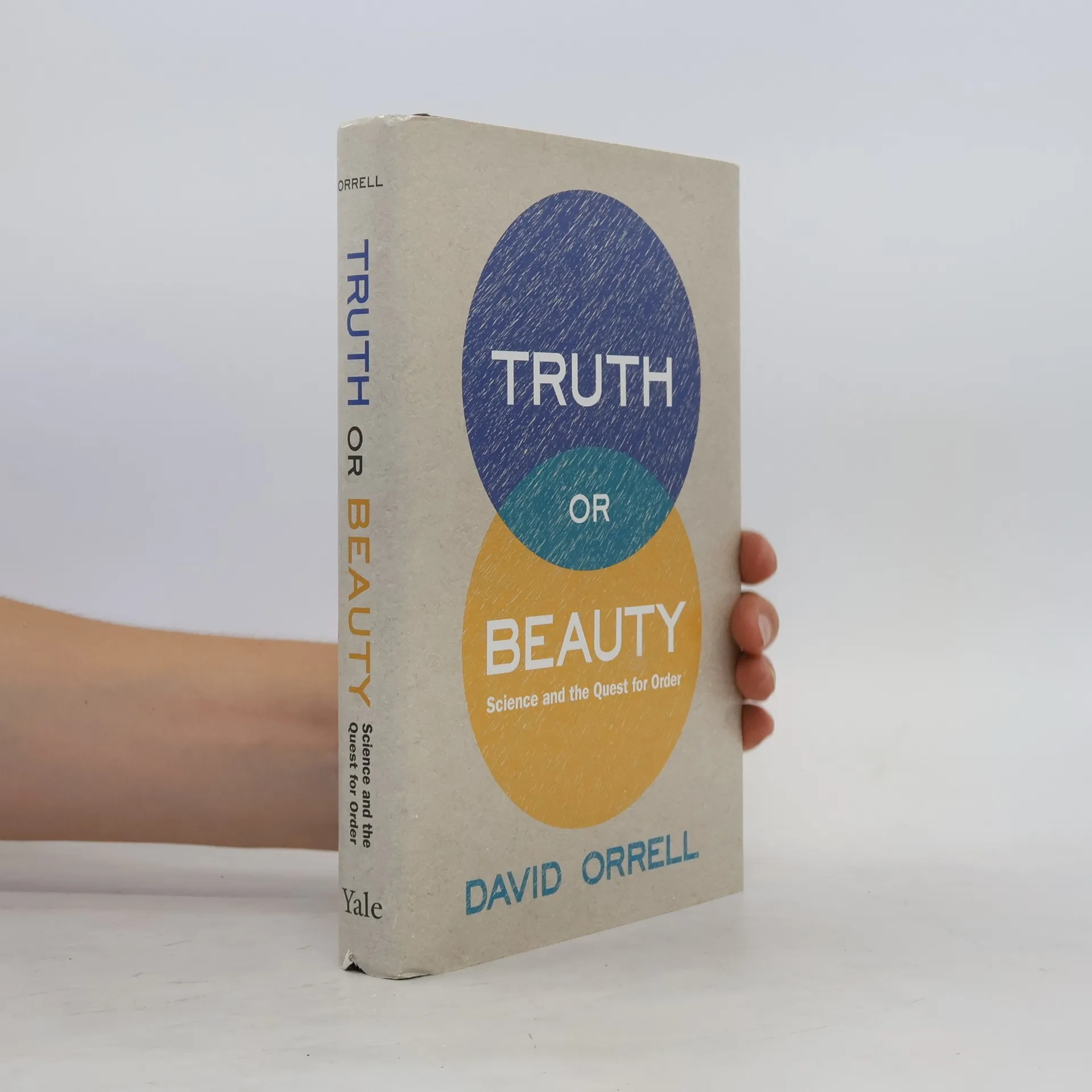
In this sweeping book, applied mathematician and popular author David Orrell questions the promises and pitfalls of associating beauty with truth, showing how ideas of mathematical elegance have inspired—and have sometimes misled—scientists attempting to understand nature. Orrell shows how the ancient Greeks constructed a concept of the world based on musical harmony; later thinkers replaced this model with a program, based on Newton’s “rational mechanics,” to reduce the universe to a few simple equations. He then turns to current physical theories, such as supersymmetric string theory—again influenced by deep aesthetic principles. The book sheds new light on historical investigations and also recent research, including the examinations ongoing at the Large Hadron Collider. Finally, broadening his discussion to other fields of research, including economics, architecture, and health, Orrell questions whether these aesthetic principles reflect an accurate way to explain and understand the structure of our world.
Achat du livre
Truth Or Beauty, David Orrell
- Langue

- Année de publication
- 2012
- Reliure
- (rigide)
Modes de paiement
Il manque plus que ton avis ici.
- Titre
- Truth Or Beauty
- Sous-titre
- Science and the Quest for Order
- Langue
- Anglais
- Auteurs
- David Orrell
- Éditeur
- Yale University Press
- Publié
- 2012
- Format
- rigide
- Pages
- 348
- ISBN10
- 0300186614
- ISBN13
- 9780300186611
- Séries
- Mots clés
- Logique
- Évaluation
- 3,6 sur 5
- Description
- In this sweeping book, applied mathematician and popular author David Orrell questions the promises and pitfalls of associating beauty with truth, showing how ideas of mathematical elegance have inspired—and have sometimes misled—scientists attempting to understand nature. Orrell shows how the ancient Greeks constructed a concept of the world based on musical harmony; later thinkers replaced this model with a program, based on Newton’s “rational mechanics,” to reduce the universe to a few simple equations. He then turns to current physical theories, such as supersymmetric string theory—again influenced by deep aesthetic principles. The book sheds new light on historical investigations and also recent research, including the examinations ongoing at the Large Hadron Collider. Finally, broadening his discussion to other fields of research, including economics, architecture, and health, Orrell questions whether these aesthetic principles reflect an accurate way to explain and understand the structure of our world.