



Paramètres
- 231pages
- 9 heures de lecture
En savoir plus sur le livre
The central concern in this book is the relationship between language and group identity, a relationship that is thrown into greatest relief in minority settings. Since much of the current interest in minority languages revolves around issues of identity politics, language rights and the plight of endangered languages, one aim of the book is to summarise and analyse these and other pivotal themes. Furthermore, since the uniqueness of every language-contact situation does not rest upon unique elements or features but, rather, upon the particular weightings and combinations of features that recur across settings the second aim here is to provide a general descriptive framework within which a wide range of contact settings may be more easily understood. The book thus begins with a discussion of such matters as language decline, maintenance and revival, the dynamics of minority languages, and the ecology of language. It then offers a typological framework that draws and expands upon previous categorising efforts. Finally, the book presents four case studies that are both intrinsically interesting and more importantly provide specific illustrations of the generalities discussed earlier."
Achat du livre
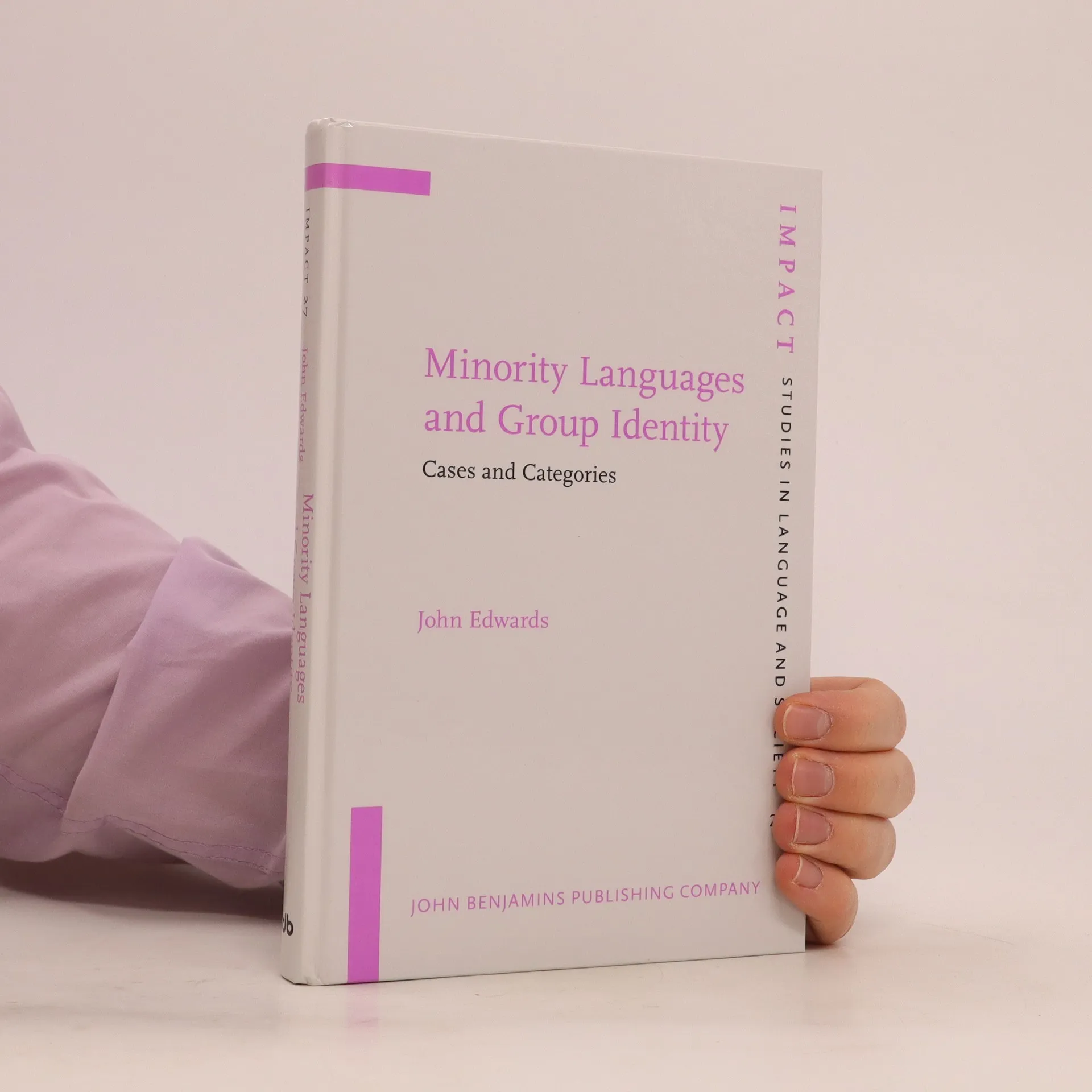
Minority languages and group identity : cases and categories, John Edwards
- Langue

- Année de publication
- 2010
- Reliure
- (rigide)
Modes de paiement
Personne n'a encore évalué .
- Titre
- Minority languages and group identity : cases and categories
- Langue
- Anglais
- Auteurs
- John Edwards
- Éditeur
- John Benjamins Pub. Co.
- Publié
- 2010
- Format
- rigide
- Pages
- 231
- ISBN10
- 9027218668
- ISBN13
- 9789027218667
- Séries
- Catégories
- Mots clés
- Description
- The central concern in this book is the relationship between language and group identity, a relationship that is thrown into greatest relief in minority settings. Since much of the current interest in minority languages revolves around issues of identity politics, language rights and the plight of endangered languages, one aim of the book is to summarise and analyse these and other pivotal themes. Furthermore, since the uniqueness of every language-contact situation does not rest upon unique elements or features but, rather, upon the particular weightings and combinations of features that recur across settings the second aim here is to provide a general descriptive framework within which a wide range of contact settings may be more easily understood. The book thus begins with a discussion of such matters as language decline, maintenance and revival, the dynamics of minority languages, and the ecology of language. It then offers a typological framework that draws and expands upon previous categorising efforts. Finally, the book presents four case studies that are both intrinsically interesting and more importantly provide specific illustrations of the generalities discussed earlier."