

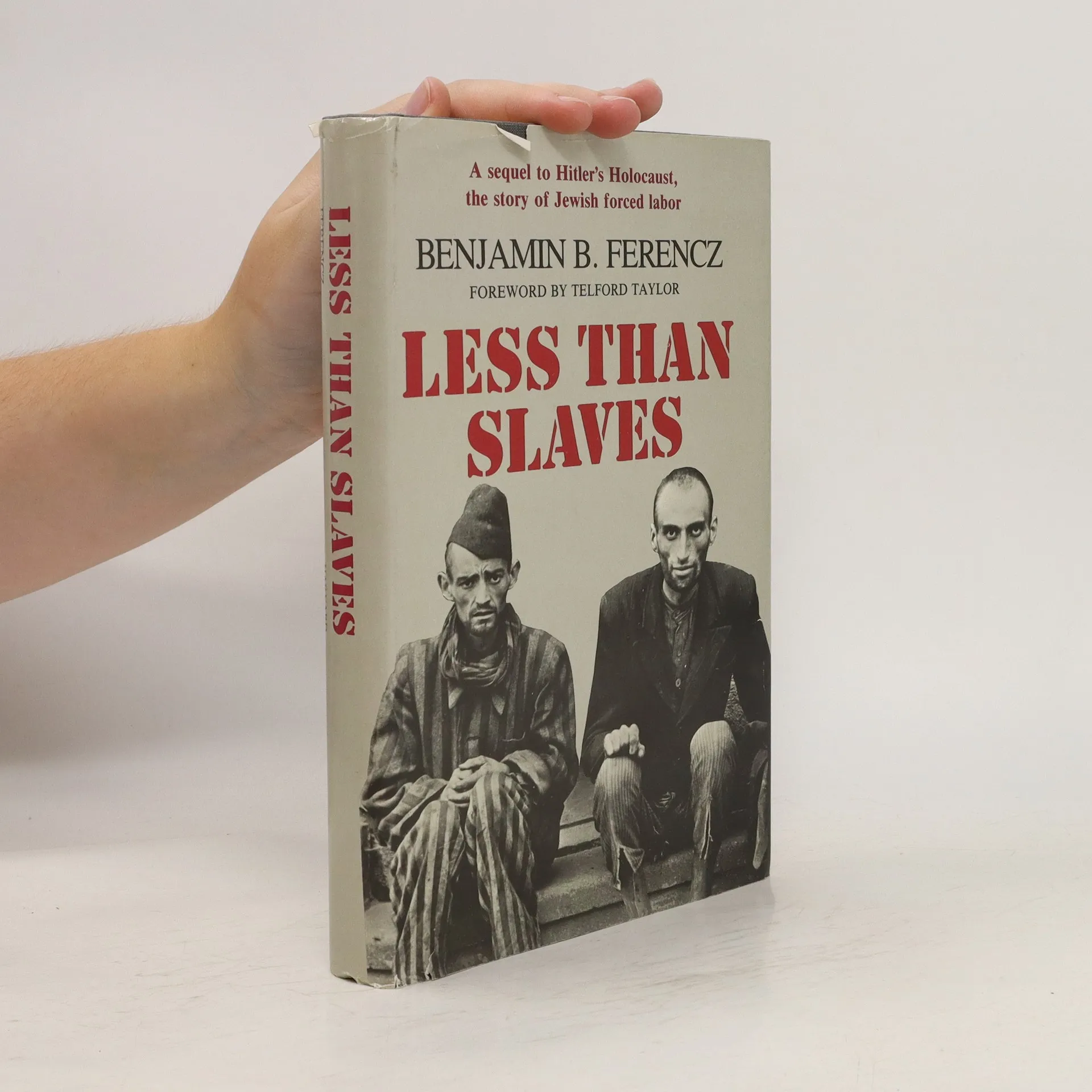


Less Than Slaves
Auteurs
En savoir plus sur le livre
As a United States war crimes investigator during World War II, Benhamin B. Ferencz participated in the liberation of Nazi concentration camps. He returned to Germany after the war to help bring perpetrators of war crimes to justice and remained to direct restitution programs for Nazi victims. In Less Than Slaves, Ferencz describes the painstaking efforts that were made to persuade German industrial firms such as I. G. Farben, Krupp, AEG, Rheinmetall, and Daimler-Benz to compensate camp inmates who were exploited as forced laborers. The meager outcome of these efforts emerges from searing pages that detail the difficulties confronted by Ferencz and his dedicated colleagues. This engrossing narrative is a vital resource for all who are concerned with the moral, legal, and practical implications of the recent significant increase in the number of compensation claims by victims of persecution. First published in 1979, Ferencz's penetrating firsthand account returns to print with the author's evaluation of its historical significance and current relevance.
Achat du livre
Less Than Slaves, Benjamin Ferencz
- Langue

- Année de publication
- 1980
- Reliure
- (rigide)
Modes de paiement
Personne n'a encore évalué .
- Titre
- Less Than Slaves
- Langue
- Anglais
- Auteurs
- Benjamin Ferencz
- Publié
- 1980
- Format
- rigide
- Pages
- 249
- ISBN10
- 0674525256
- ISBN13
- 9780674525252
- Séries
- Mots clés
- Thème historique, Littérature juive
- Description
- As a United States war crimes investigator during World War II, Benhamin B. Ferencz participated in the liberation of Nazi concentration camps. He returned to Germany after the war to help bring perpetrators of war crimes to justice and remained to direct restitution programs for Nazi victims. In Less Than Slaves, Ferencz describes the painstaking efforts that were made to persuade German industrial firms such as I. G. Farben, Krupp, AEG, Rheinmetall, and Daimler-Benz to compensate camp inmates who were exploited as forced laborers. The meager outcome of these efforts emerges from searing pages that detail the difficulties confronted by Ferencz and his dedicated colleagues. This engrossing narrative is a vital resource for all who are concerned with the moral, legal, and practical implications of the recent significant increase in the number of compensation claims by victims of persecution. First published in 1979, Ferencz's penetrating firsthand account returns to print with the author's evaluation of its historical significance and current relevance.