

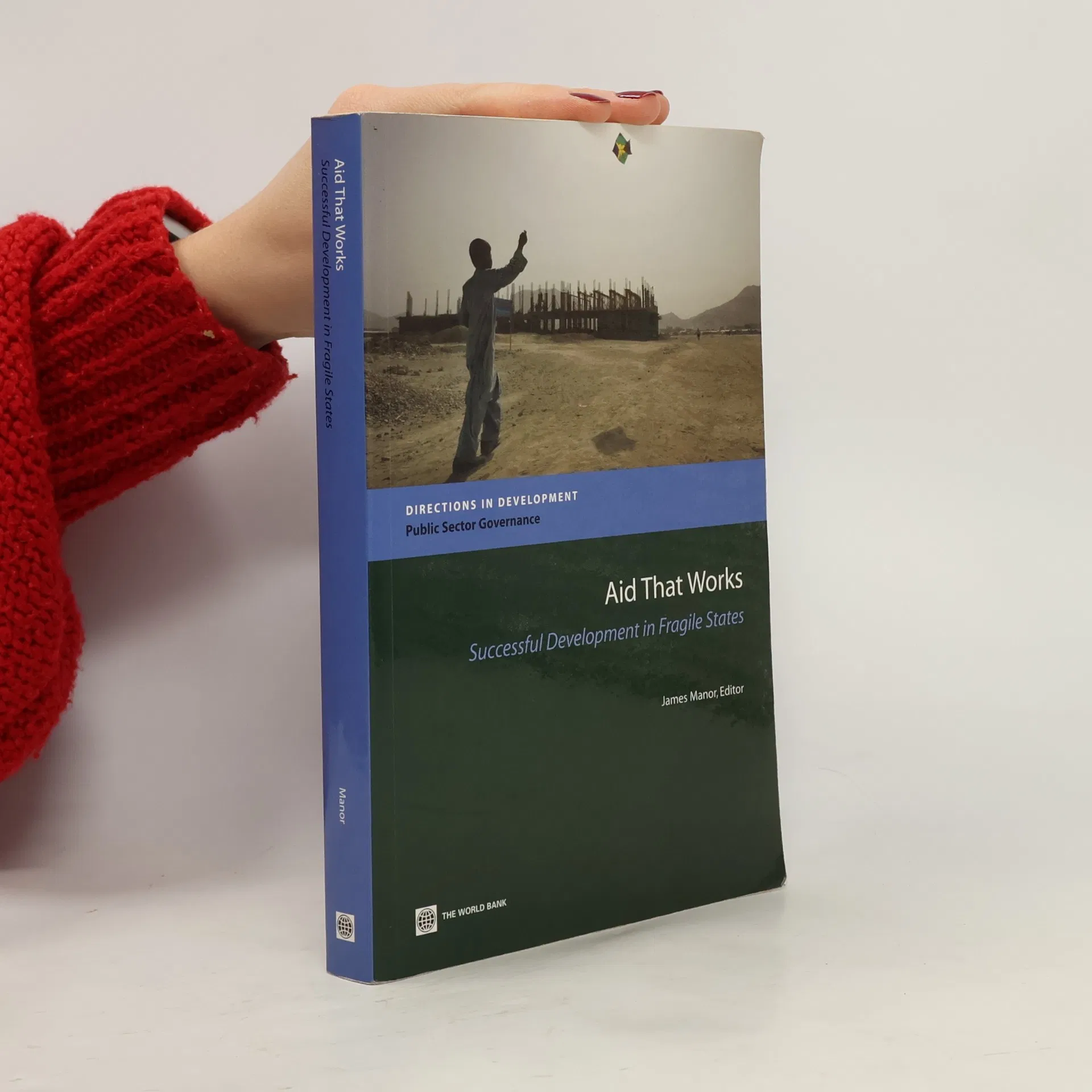



Directions in Development: Aid That Works
Successful Development in Fragile States
Auteurs
Paramètres
- 301pages
- 11 heures de lecture
En savoir plus sur le livre
Research in recent years on aid effectiveness shows that significant obstacles in fragile states--insecurity, poor governance and weak implementation capacity--usually prevent aid from achieving the desired results in these environments. This study investigates the attributes and effectiveness of donor-supported programmes and projects that worked well under difficult conditions in fragile states. Presented in this study are nine development initiatives in six less developed countries--Afghanistan, Cambodia, Mozambique, Sierra Leone, Timor Leste and Uganda. The cases show that development initiatives, which engage local communities and local level governments, are often able to have significant impact. However, for more substantial improvements to take places, localized gains need to be scaled up either horizontally (other localities) or vertically (to higher levels). Given the advantages of working at the local level and the difficulty of working through mainstream bureaucratic agencies at higher levels in these countries, donors often prefer to create 'parallel-agencies' to reach out to larger numbers of beneficiaries. However, this may in the long run weaken the legitimacy of mainstream government institutions, and donor agencies may therefore choose to work as closely as possible with government officials from the beginning to build trust and demonstrating that new initiatives are non-threatening and help prepare the eventual mainstreaming of 'parallel agencies'.
Achat du livre
Directions in Development: Aid That Works, James Manor
- Langue

- Année de publication
- 2007
- Reliure
- (souple),
- État du livre
- Bon
- Prix
- 9,79 €
Modes de paiement
Personne n'a encore évalué .
- Titre
- Directions in Development: Aid That Works
- Sous-titre
- Successful Development in Fragile States
- Langue
- Anglais
- Auteurs
- James Manor
- Éditeur
- World Bank Publications
- Publié
- 2007
- Format
- souple
- Pages
- 301
- ISBN10
- 0821362011
- ISBN13
- 9780821362013
- Séries
- Mots clés
- Politique, Théories politiques, Écrits rassemblés, Développement, Cas d'étude, Afghanistan, Pays en développement, Société civile, Cambodge, Ouganda, Mozambique, Sierra Leone
- Description
- Research in recent years on aid effectiveness shows that significant obstacles in fragile states--insecurity, poor governance and weak implementation capacity--usually prevent aid from achieving the desired results in these environments. This study investigates the attributes and effectiveness of donor-supported programmes and projects that worked well under difficult conditions in fragile states. Presented in this study are nine development initiatives in six less developed countries--Afghanistan, Cambodia, Mozambique, Sierra Leone, Timor Leste and Uganda. The cases show that development initiatives, which engage local communities and local level governments, are often able to have significant impact. However, for more substantial improvements to take places, localized gains need to be scaled up either horizontally (other localities) or vertically (to higher levels). Given the advantages of working at the local level and the difficulty of working through mainstream bureaucratic agencies at higher levels in these countries, donors often prefer to create 'parallel-agencies' to reach out to larger numbers of beneficiaries. However, this may in the long run weaken the legitimacy of mainstream government institutions, and donor agencies may therefore choose to work as closely as possible with government officials from the beginning to build trust and demonstrating that new initiatives are non-threatening and help prepare the eventual mainstreaming of 'parallel agencies'.