

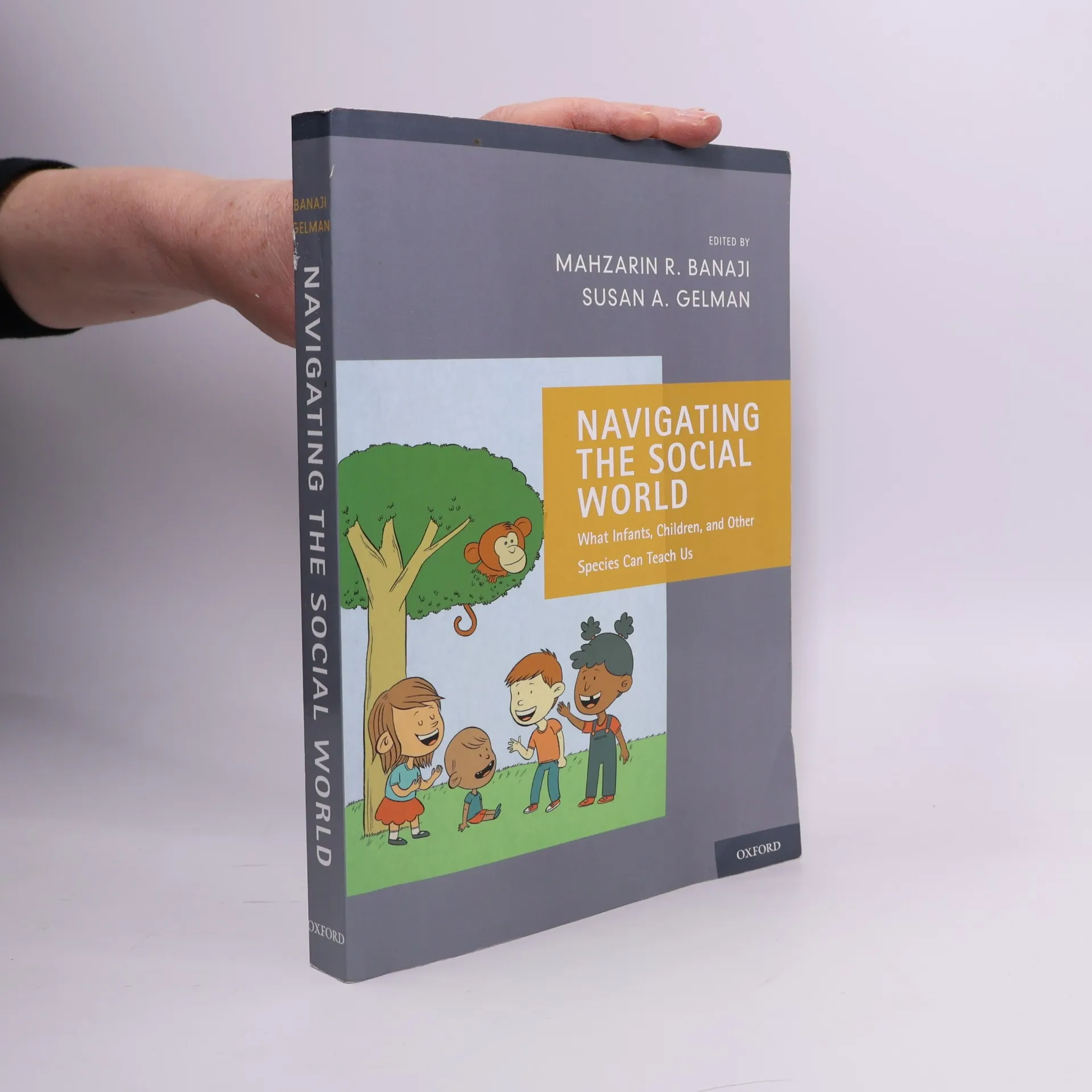


Navigating the Social World
What Infants, Children, and Other Species Can Teach Us
En savoir plus sur le livre
Navigating the social world requires sophisticated cognitive machinery that, although present quite early in crude forms, undergoes significant change across the lifespan. This book will be the first to report on evidence that has accumulated on an unprecedented scale, showing us what capacities for social cognition are present at birth and early in life, and how these capacities develop through learning in the first years of life. The volume will highlight what is known about the discoveries themselves but also what these discoveries imply about the nature of early social cognition and the methods that have allowed these discoveries -- what is known concerning the phylogeny and ontogeny of social cognition. To capture the full depth and breadth of the exciting work that is blossoming on this topic in a manner that is accessible and engaging, the editors invited 70 leading researchers to develop a short report of their work that would be written for a broad audience. The purpose of this format was for each piece to focus on a single core message: are babies aware of what is right and wrong, why do children have the same implicit intergroup preferences that adults do, what does language do to the building of category knowledge, and so on. The unique format and accessible writing style will be appealing to graduate students and researchers in cognitive psychology, developmental psychology, and social psychology.
Achat du livre
Navigating the Social World, Mahzarin R. Banaji, Susan A. Gelman
- Langue

- Année de publication
- 2014
- Reliure
- (souple),
- État du livre
- Bon
- Prix
- 6,89 €
Modes de paiement
Personne n'a encore évalué .
- Titre
- Navigating the Social World
- Sous-titre
- What Infants, Children, and Other Species Can Teach Us
- Langue
- Anglais
- Auteurs
- Mahzarin R. Banaji, Susan A. Gelman
- Éditeur
- Oxford University Press
- Publié
- 2014
- Format
- souple
- Pages
- 448
- ISBN10
- 0199361061
- ISBN13
- 9780199361069
- Séries
- Mots clés
- Thèmes psychologiques, Psychologie sociale
- Description
- Navigating the social world requires sophisticated cognitive machinery that, although present quite early in crude forms, undergoes significant change across the lifespan. This book will be the first to report on evidence that has accumulated on an unprecedented scale, showing us what capacities for social cognition are present at birth and early in life, and how these capacities develop through learning in the first years of life. The volume will highlight what is known about the discoveries themselves but also what these discoveries imply about the nature of early social cognition and the methods that have allowed these discoveries -- what is known concerning the phylogeny and ontogeny of social cognition. To capture the full depth and breadth of the exciting work that is blossoming on this topic in a manner that is accessible and engaging, the editors invited 70 leading researchers to develop a short report of their work that would be written for a broad audience. The purpose of this format was for each piece to focus on a single core message: are babies aware of what is right and wrong, why do children have the same implicit intergroup preferences that adults do, what does language do to the building of category knowledge, and so on. The unique format and accessible writing style will be appealing to graduate students and researchers in cognitive psychology, developmental psychology, and social psychology.