

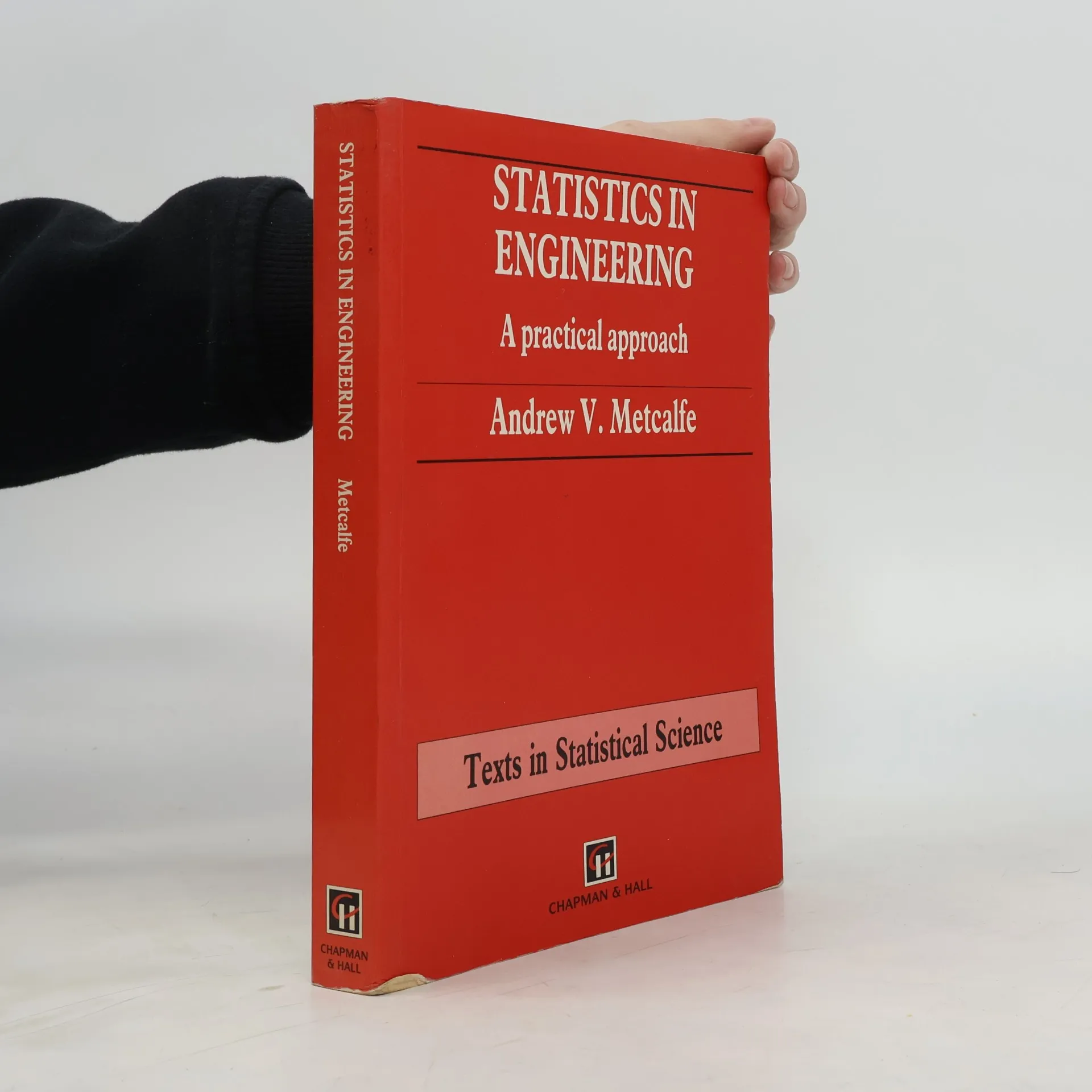

Chapman & Hall Texts in Statistical Science: Statistics in Engineering
A Practical Approach
Auteurs
En savoir plus sur le livre
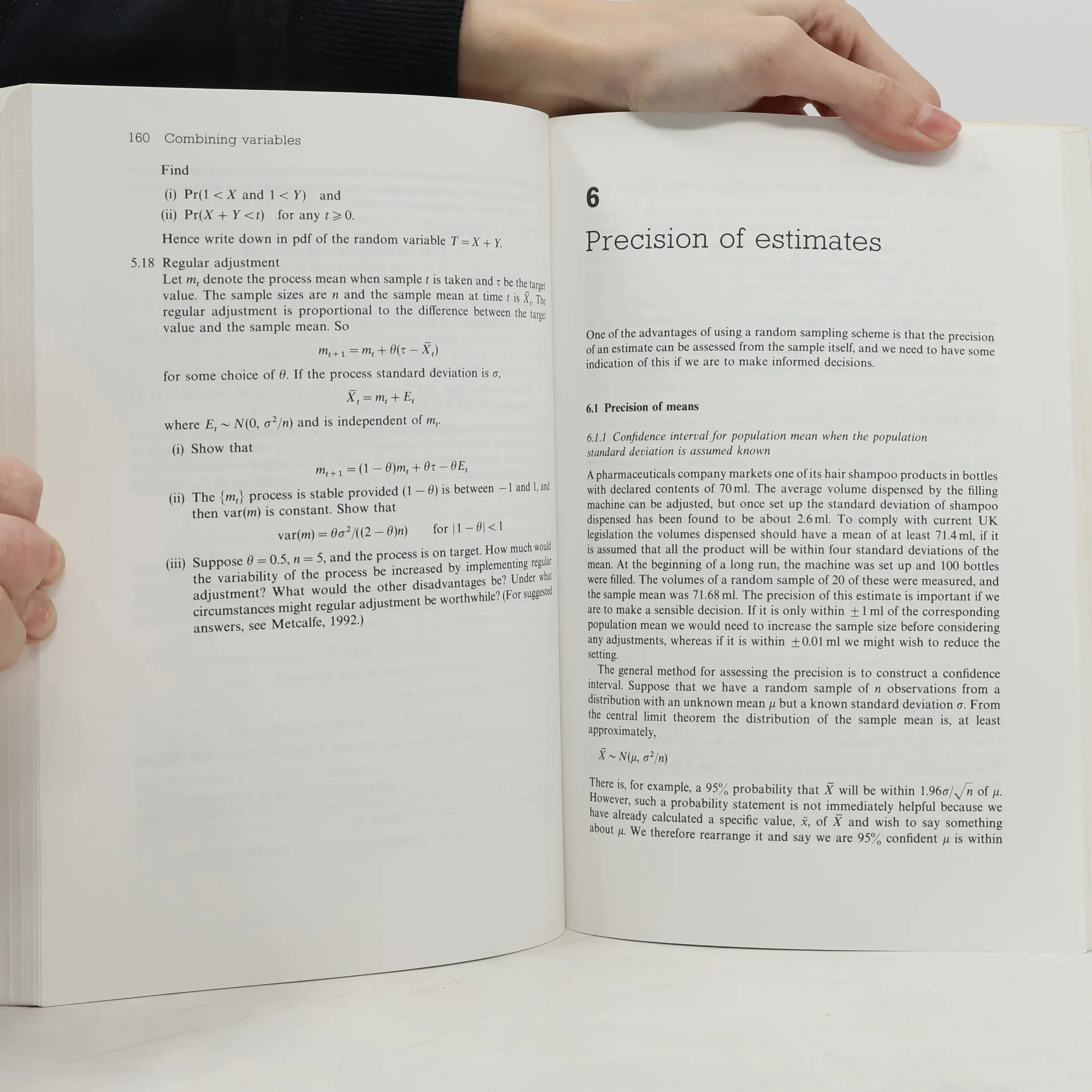
Statistics in Engineering provides a succinct introduction to statistics. The ideas are introduced with examples set in their practical context. The underlying mathematics are given in an informal way and are included for those who find that mathematical justification helps their understanding of concepts, and for anyone who needs to take the subject further The author indicates sections that can be omitted without any loss of continuity. The book is kept as simple as possible, and assumes only some familiarity with elementary calculus and matrices.The first seven chapters of the book cover a typical 40-hour statistics module taken by engineering or science students who are beginning the subject. This includes the basic ideas, relationships between variables, and the design and analysis of experiments. The final chapter looks at some important engineering situations that are not fully covered by the methods of the preceding chapters.
Achat du livre
Chapman & Hall Texts in Statistical Science: Statistics in Engineering, Andrew V. Metcalfe
- Langue

- Année de publication
- 1994
- Reliure
- (souple),
- État du livre
- Bon
- Prix
- 14,99 €
Modes de paiement
Personne n'a encore évalué .
- Titre
- Chapman & Hall Texts in Statistical Science: Statistics in Engineering
- Sous-titre
- A Practical Approach
- Langue
- Anglais
- Auteurs
- Andrew V. Metcalfe
- Éditeur
- Chapman and Hall/CRC
- Publié
- 1994
- Format
- souple
- Pages
- 446
- ISBN10
- 0412492202
- ISBN13
- 9780412492204
- Séries
- Mots clés
- Ingénierie, Statistiques
- Description
- Statistics in Engineering provides a succinct introduction to statistics. The ideas are introduced with examples set in their practical context. The underlying mathematics are given in an informal way and are included for those who find that mathematical justification helps their understanding of concepts, and for anyone who needs to take the subject further The author indicates sections that can be omitted without any loss of continuity. The book is kept as simple as possible, and assumes only some familiarity with elementary calculus and matrices.The first seven chapters of the book cover a typical 40-hour statistics module taken by engineering or science students who are beginning the subject. This includes the basic ideas, relationships between variables, and the design and analysis of experiments. The final chapter looks at some important engineering situations that are not fully covered by the methods of the preceding chapters.